

Noirvember is the perfect excuse to discover film critics’ favourite style anew
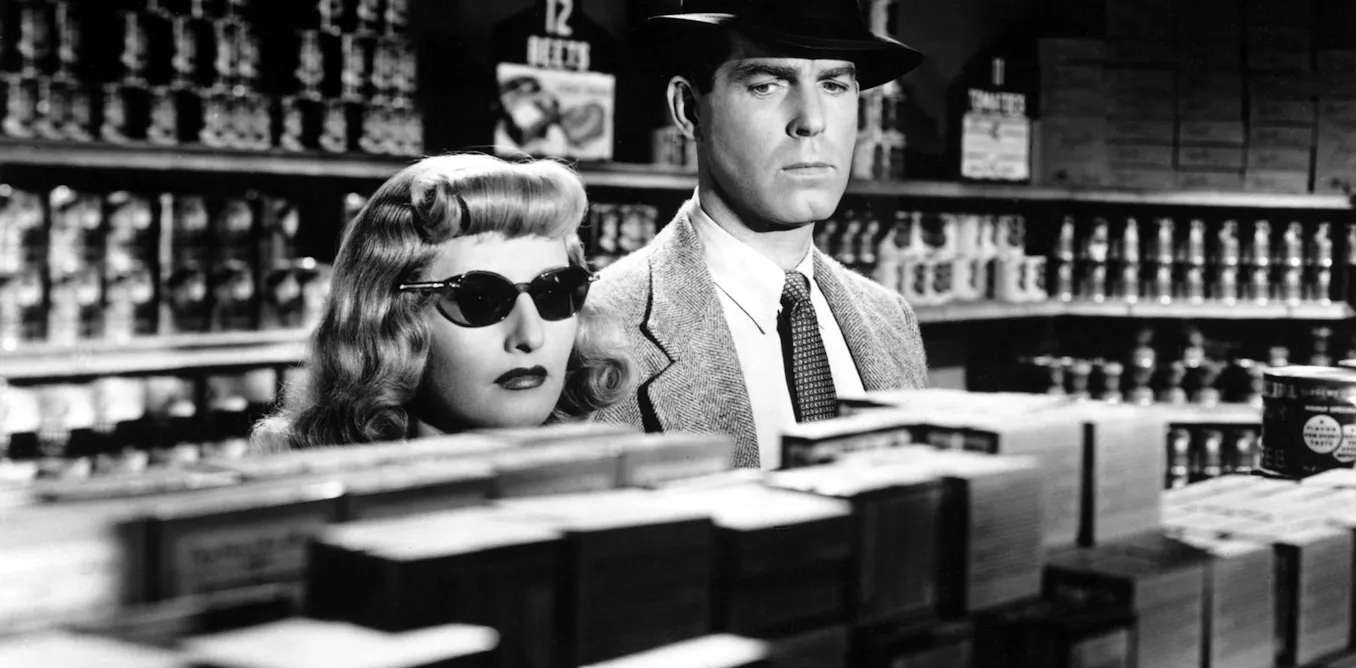
A November film tradition
Marya E. Gates created Noirvember in 2010, inviting movie lovers to carry Halloween’s scary-film tradition into November with film noir instead of horror. The month-long event is now observed globally through repertory cinemas, libraries and streaming platforms.
Film noir is commonly associated with Hollywood crime films of the 1940s and 1950s. They often pair a pessimistic outlook with chiaroscuro lighting, using strong contrasts between darkness and light.
Familiar stories, varied forms
Classic examples include The Maltese Falcon (1941), The Big Sleep (1946) and Double Indemnity (1944). Their recurring elements include cynical private detectives, femme fatales and hard-boiled speech. Many well-known Hollywood noirs adapted pulp fiction by Dashiell Hammett, Raymond Chandler and James M. Cain.
Noir also appeared across different kinds of films. Gilda (1946) is a musical melodrama, The Big Heat (1953) a police procedural, and Criss-Cross (1949) a heist film.
Critics shaped the label
Film noir was named and developed by critics rather than established as a conventional Hollywood genre. The phrase appeared in 1930s France amid political upheaval, first as a critical label for films later grouped as French Poetic Realism, including Pepé Le Moko (1937), La Bête Humaine (1938) and Port of Shadows (1938).
Le Petit Journal condemned Port of Shadows as “immoral and demoralising,” while Marianne described noir films as “grim.” After the Second World War, critic Nino Frank applied the term again to Hollywood films that had been kept from French cinemas during Nazi occupation. In 1946, he discussed The Maltese Falcon, Double Indemnity, Laura (1944) and Murder, My Sweet (1944), treating noir as a compliment.
Noir finds new audiences
Raymond Borde and Etienne Chaumeton’s A Panorama of American Film Noir: 1941-1953 helped establish the style’s main features and a basic canon. The term remained little known until the late 1960s and early 1970s, when academic film studies grew and it appeared in journals including Sight and Sound, Movie and Film Comment.
In a 1972 Film Comment article, Paul Schrader argued noir was not a genre but a set of qualities of tone and mood. He connected its fatalism with New Hollywood, and films including Chinatown (1974) and The Long Goodbye (1973) later updated noir conventions as neo-noir. Schrader also wrote Taxi Driver (1976) and directed Hardcore (1979) and American Gigolo (1980).
Key points
- Marya E. Gates launched Noirvember in 2010 as a November celebration of film noir.
- Film noir is linked to 1940s and 1950s Hollywood crime films, stark lighting and pessimistic themes.
- Critics first used the term in France before applying it to postwar Hollywood films.
- Neo-noir films later updated noir conventions for audiences, including Chinatown and The Long Goodbye.