

From Mars Survival to Intelligent Spiders: 8 Hard Sci-Fi Books to Read Before Kicking the Bucket
Consciousness and alien intelligence
In Peter Watts’ Blindsight, humanity detects signs of alien life in 2082, when mysterious objects streak through Earth’s atmosphere. Aboard the antimatter-powered Theseus, five transhuman specialists investigate a signal near the solar system’s edge.
The crew encounters Scramblers, beings that process information without self-awareness. Watts uses the encounter to question whether consciousness and emotion help humans survive, or whether they can hinder clear thinking when facing threats that seem to demand pure logic.
Survival on the red planet
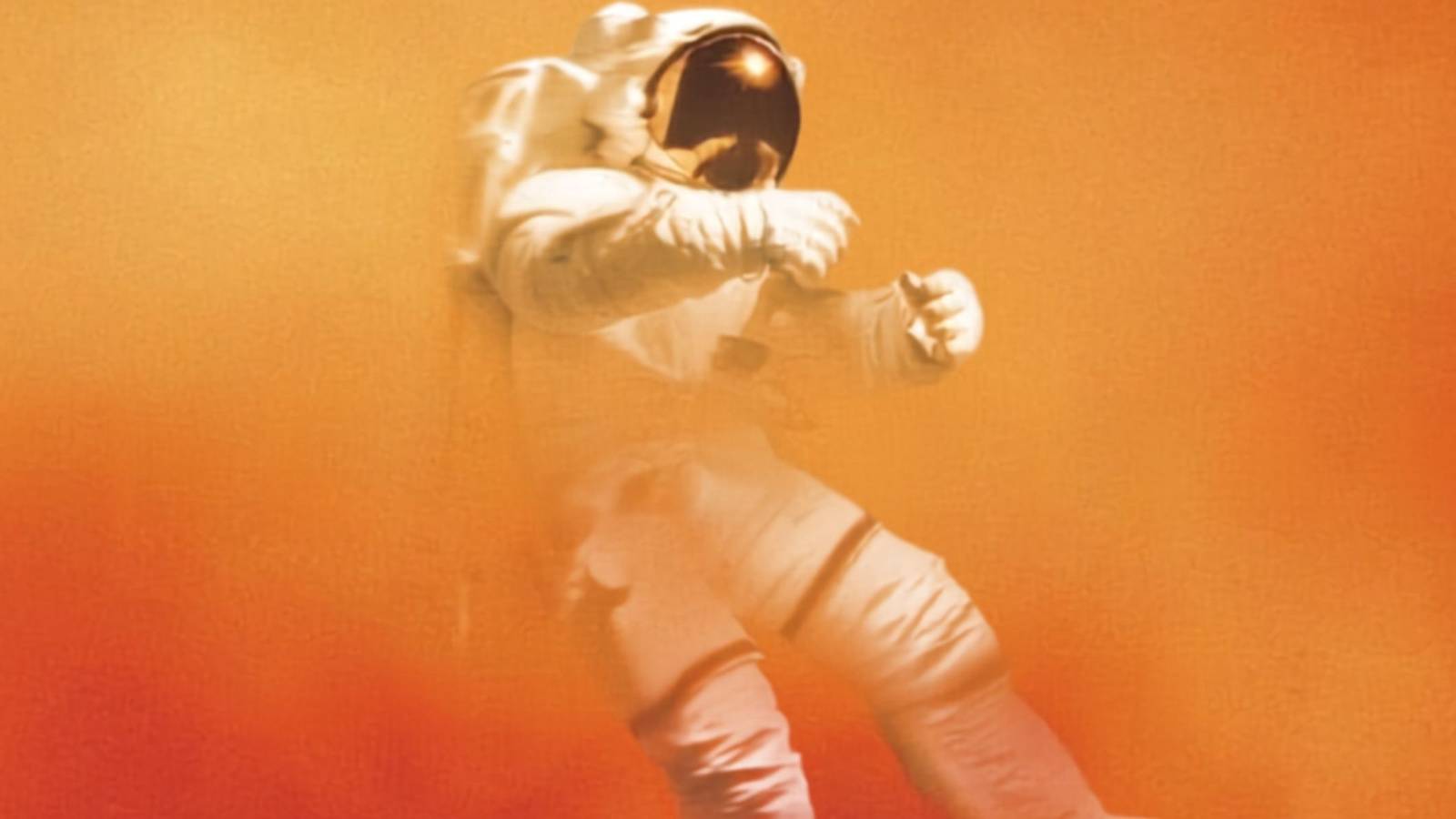
Andy Weir’s The Martian follows Mark Watney after a dust storm forces NASA’s Ares 3 crew to leave Mars. Injured and presumed dead, he is stranded with limited supplies, a damaged spacesuit and no way to contact Earth.
Watney draws on scientific knowledge to try to get home, including closed-ecosystem farming, making water from hydrazine and using ion propulsion. The novel presents these challenges in an accessible, character-driven style without making his predicament seem simple.
Digital minds face a cosmic threat
Greg Egan’s Diaspora imagines a 30th-century society where biological humans coexist with artificial intelligences and digitally created minds in virtual polises. After astronomers detect a cosmic event that could destroy Earth, a research team led by the mathematically gifted digital intelligence Yatima investigates.
The story moves into unfamiliar territory in theoretical physics and can be difficult to follow. Readers may need to look up the science behind its ideas, including Egan’s Kozuch Theory.
Evolution across two civilizations
In Adrian Tchaikovsky’s Children of Time, humanity’s remaining survivors seek a new home after Earth becomes uninhabitable. On a distant terraformed world, a failed scientific experiment triggers an unexpected evolutionary process, producing intelligent spiders.
The two civilizations develop separately before their paths converge. Drawing on Tchaikovsky’s background in zoology and psychology, the novel focuses on animal cognition and evolutionary biology; hard sci-fi purists may question some of its scientific ideas.
Key points
- Blindsight asks whether consciousness and emotion help humans meet existential threats.
- The Martian follows Mark Watney’s science-driven efforts to survive on Mars.
- Diaspora explores digital societies and demanding ideas in theoretical physics.
- Children of Time traces the parallel development of humans and intelligent spiders.