

A faster surge could make this year’s monster El Niño even bigger than the legendary 1997 event, NASA warns
Past events brought severe impacts
The developing 2026 event is being compared with those episodes using decades of satellite measurements. Researchers caution that El Niño events differ in where warm water gathers and how the atmosphere responds.
Satellites track ocean height
Satellite altimetry measures small changes in ocean surface height. Because warmer seawater expands, elevated sea levels in the equatorial Pacific can indicate where heat is building during El Niño.
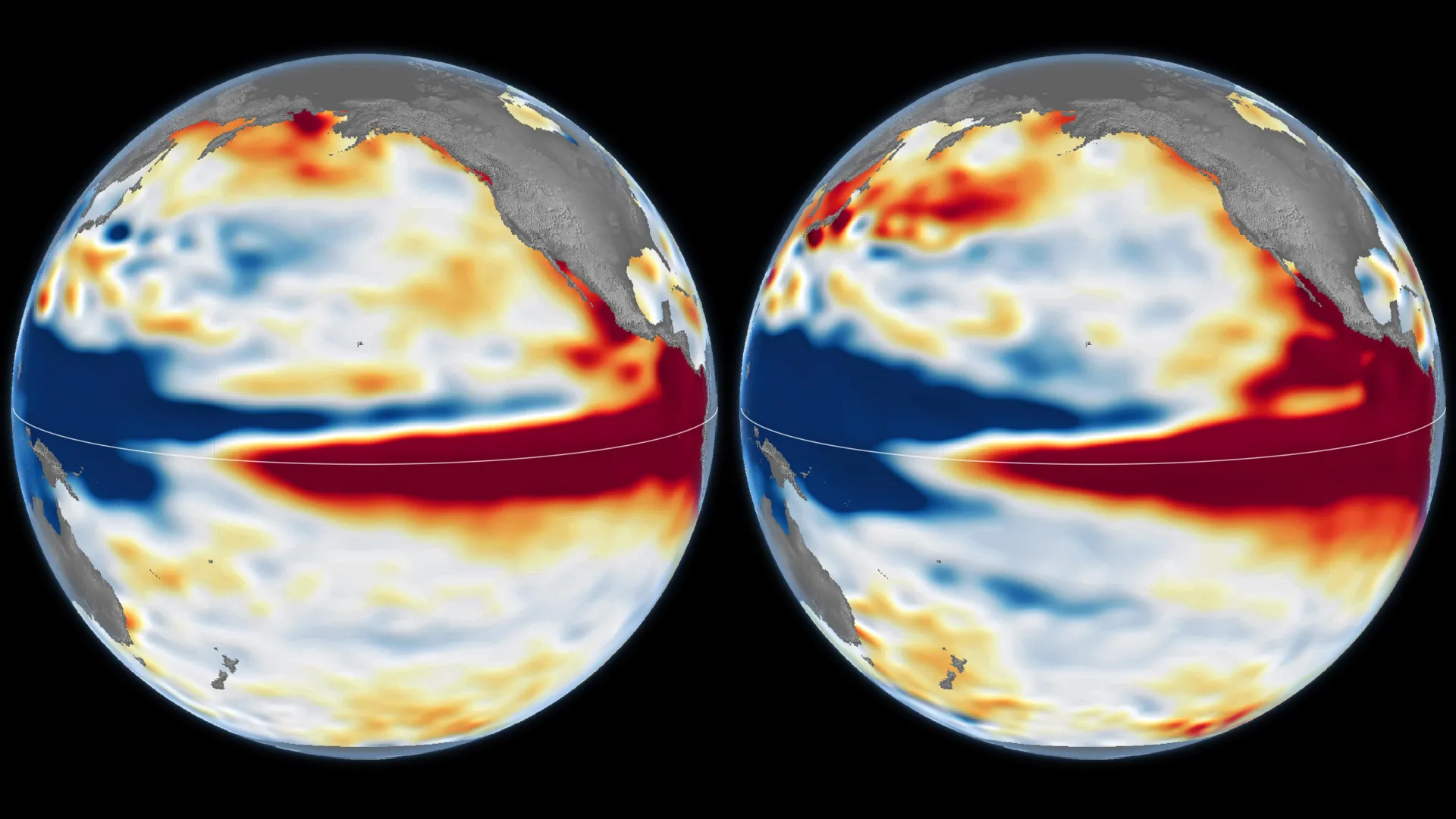
NASA compared measurements from October 13, 1997, collected by TOPEX/Poseidon, with data from October 12, 2026, gathered by Sentinel-6 Michael Freilich. JPL scientists processed the datasets and removed seasonal patterns and long-term trends to help show temporary changes.
A rapid rise draws attention
The 2026 El Niño intensified more abruptly than the 1997-98 event. Yet October satellite data show a similar Pacific pattern: lower sea levels in the west, higher levels in the east, and unusually warm water extending along the equator toward South America.
The satellite record spans 35 years, with missions following nearly identical paths and overlapping in operation. Josh Willis, a project scientist for sea level missions at NASA's Jet Propulsion Laboratory, said the current event is on track to be even bigger than the 1997 episode.
Key points
- NASA says the 2026 El Niño could rival or exceed the 1997-98 event.
- Satellite data show similar Pacific sea-level patterns in 1997 and 2026.
- The 2026 event intensified more abruptly than the earlier episode.
- El Niño impacts vary because each event develops differently.