

At 90, Wolf Biermann remains the singer who defied East Germany
A birthday album on freedom
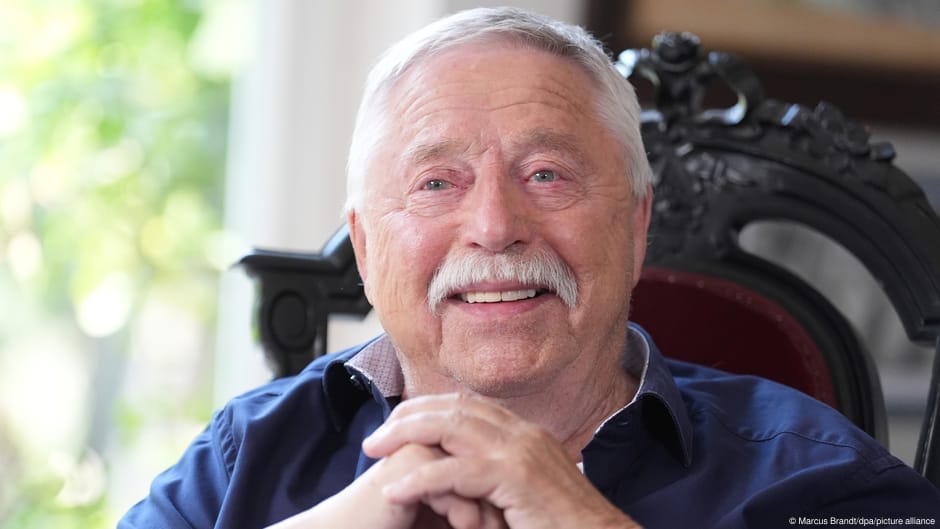
Biermann’s new album, “Unterm Haar nur Himmel” (“Beneath Hair, Only Sky”), was released to mark his 90th birthday. Its title suggests that the mind can remain free even when the world feels restrictive.
The songs address freedom and responsibility, alongside contemporary politics. In “Moritat von den Liebespaaren” (“Ballad of the Lovers”), Biermann argues that while no one person can save the world, people can help improve it by taking responsibility rather than standing aside.
A childhood marked by war
Biermann was born in Hamburg in 1936. His father, a Jewish dockworker and communist who resisted the Nazis, was arrested by the Gestapo when Biermann was three months old. After serving time in prison, his father was murdered at Auschwitz in early 1943.
Months later, Allied bombing caused a devastating firestorm in Hamburg. Biermann has said that this experience shaped him profoundly. Recalling the shelter and escape with his mother, he described a sense of safety amid destruction; 40,000 people died in the firestorm.
Choosing life in East Germany
Biermann’s mother raised him with communist and anti-fascist beliefs, hoping he would survive and help build communism. In 1953, at 16, he moved voluntarily to East Germany, where communism was the official state ideology.
In East Berlin, he studied political economy, mathematics and philosophy. Inspired by writers Bertolt Brecht and Heinrich Heine, he worked as an assistant director at the Berliner Ensemble and began writing and performing political songs.
Songs bring conflict with authorities
Biermann soon became critical of East Germany through his songs. In 1965, the ruling Socialist Unity Party, or SED, banned him from performing and publishing his work. His apartment, under constant surveillance, became a meeting place for dissidents and critical thinkers.
In 1976, authorities allowed him to travel to Cologne, West Germany. About 7,000 people came to see him perform there for four and a half hours, as he sang and mocked the East German regime.
Key points
- Biermann’s new album marks his 90th birthday and explores inner freedom.
- His father was murdered by the Nazis at Auschwitz in 1943.
- Biermann moved to East Germany voluntarily in 1953, aged 16.
- The SED banned him from performing and publishing in 1965.