

Stay Through the Credits: Ebenezer Doesn’t Have a Post-Credits Scene, but There’s a Reason
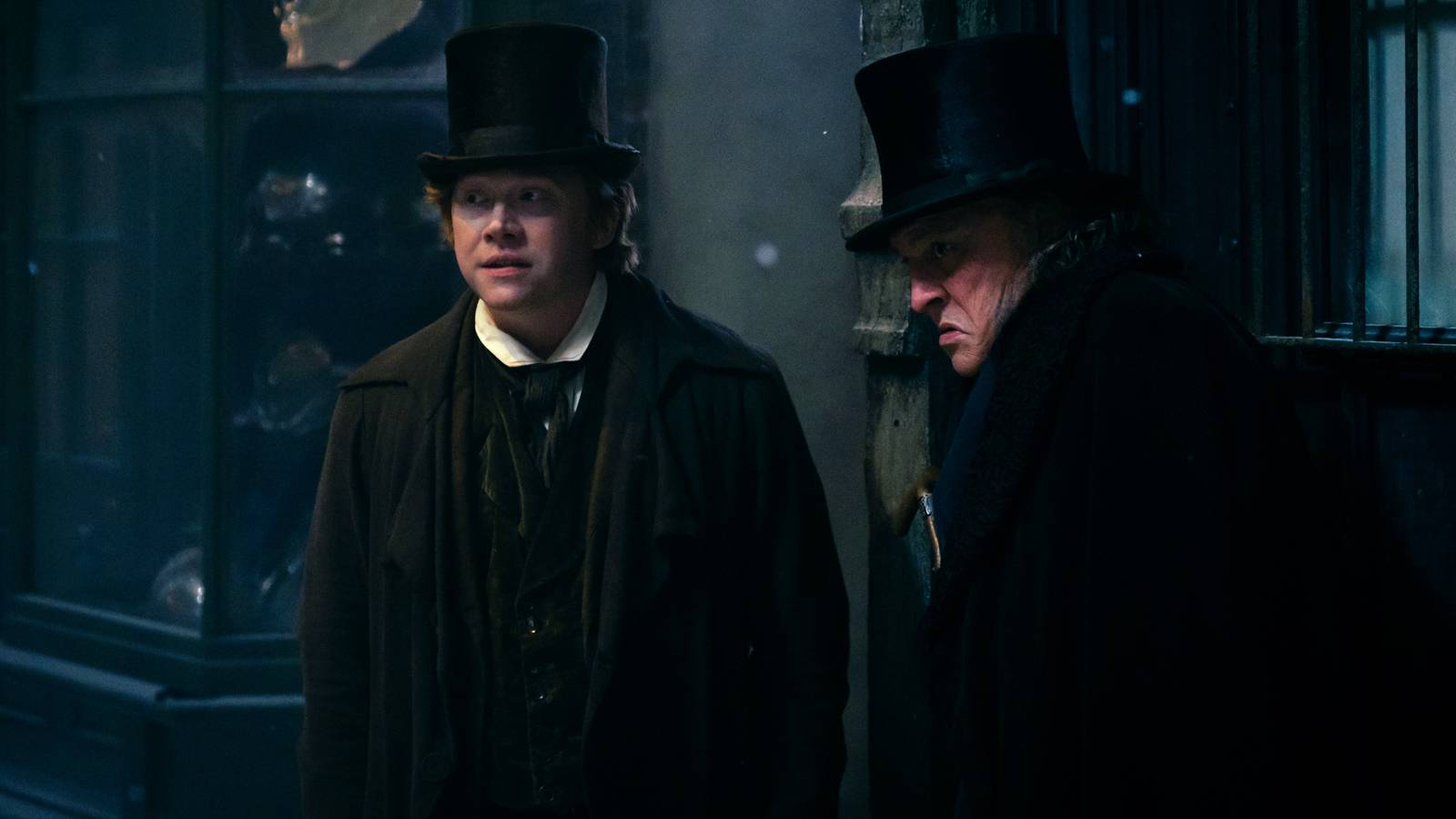
A Familiar Christmas Carol
Ebenezer follows Scrooge, a selfish businessman whose obsession with money has pushed other people aside. His former partner, Jacob Marley, appears as a ghost weighed down by chains linked to his past wrongs.
The Ghosts of Christmas Past, Present and Future then show Scrooge the consequences of his choices, leading him to change. The film keeps many of the story’s established events, while adding a more gothic style and a startling reveal of Depp as the Ghost of Christmas Future.
A Story With A Clear Ending
The film offers a familiar version of Dickens’ tale rather than a major reinvention. Some critics objected to its lack of novelty, a common concern with stories that have already received many adaptations.
The story’s purpose is to show Scrooge becoming kinder and more generous. As a standalone narrative, it reaches its endpoint when the credits begin, leaving little need for a scene that teases a sequel or another story.
Music Continues Through Credits
There is no surprise scene after the credits, but viewers who remain can hear more of the film’s score by Tyler Bates. Bates composed the original music for Ebenezer.
Bates and director Ti West have collaborated on several earlier projects, including The Sacrament (2013), X (2022) and MaXXXine (2024). Their past work gives fans another reason to stay for the credits, even without an extra scene.
Key points
- Ebenezer is a standalone adaptation of A Christmas Carol and has no post-credits scene.
- The film follows familiar story events while taking a more gothic approach.
- Additional music by composer Tyler Bates plays during the credits.
- Bates and director Ti West previously worked together on The Sacrament, X and MaXXXine.