

Foreign investment falls 12% per vulnerability point, with extreme weather risk scaring corporations away from poorer countries—and hurts companies
Climate risk shapes investment choices
Companies weighing factories, mines or regional offices consider whether projects will remain profitable over time. Climate-related questions include whether roads may flood, extreme summer heat could threaten worker safety, and clean water will be available.
The author, who studies political and environmental risks in international business, examines these decisions in a book about multinational corporations and climate change. Several studies, including the author’s analysis of 159 countries, find that countries with greater climate vulnerability received less foreign investment.
The book estimates a 12% reduction in foreign direct investment for every one-point increase in climate vulnerability on a 100-point scale, holding other relevant factors constant. The measure accounts for exposure to climate hazards and countries’ ability to adapt.
Projects face local obstacles
A proposed $1 billion data center in Kenya by Microsoft and Abu Dhabi-based G42 was delayed and eventually suspended amid concerns about water stress. Such cases illustrate how local environmental pressures can affect investment plans. Climate risk does not prevent all investment in vulnerable countries, but it can make projects more expensive, less attractive and harder to finance than projects in lower-risk locations.
Disasters also cost companies
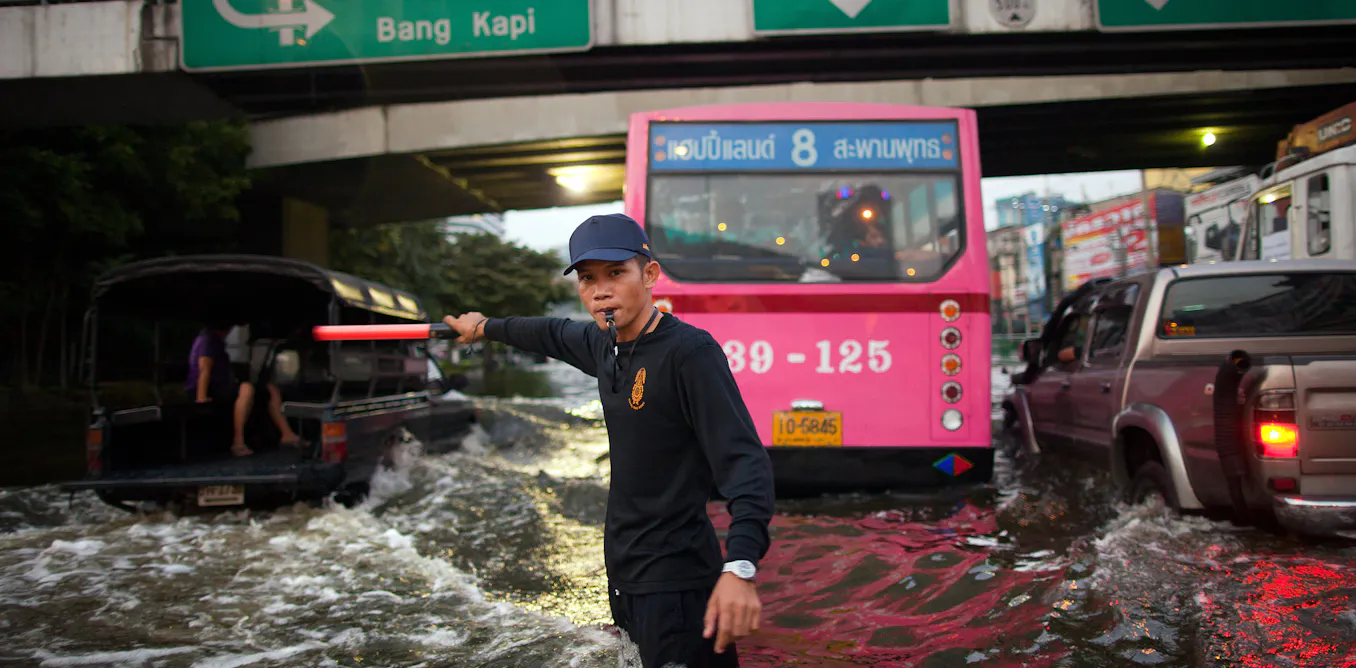
Thailand’s severe 2011 floods forced Toyota, Nissan and Honda, among other companies, to temporarily suspend production when factories flooded. Their stoppages disrupted production of parts or vehicles made there.
Unequal costs and consequences
When foreign investors stay away, developing countries may lose jobs and chances to benefit from technologies brought by multinational companies. Reduced economic activity can constrain future development even as climate impacts damage infrastructure and threaten health and well-being.
Developing countries face particular exposure because of factors including reliance on agricultural markets, geography and fragile infrastructure. A University of Chicago Climate Impact Lab report projects that 90% of heat-related deaths in coming decades will occur in low- and middle-income countries.
Key points
- Studies find less foreign investment in countries with greater climate vulnerability.
- The author’s analysis estimates a 12% investment decline per vulnerability point on a 100-point scale.
- Floods and water stress have disrupted corporate projects and infrastructure in several countries.
- Reduced investment can mean fewer jobs and less access to technologies in developing economies.