

Auschwitz survivor’s return underscores fears of rising antisemitism across Europe
Auschwitz and remembrance
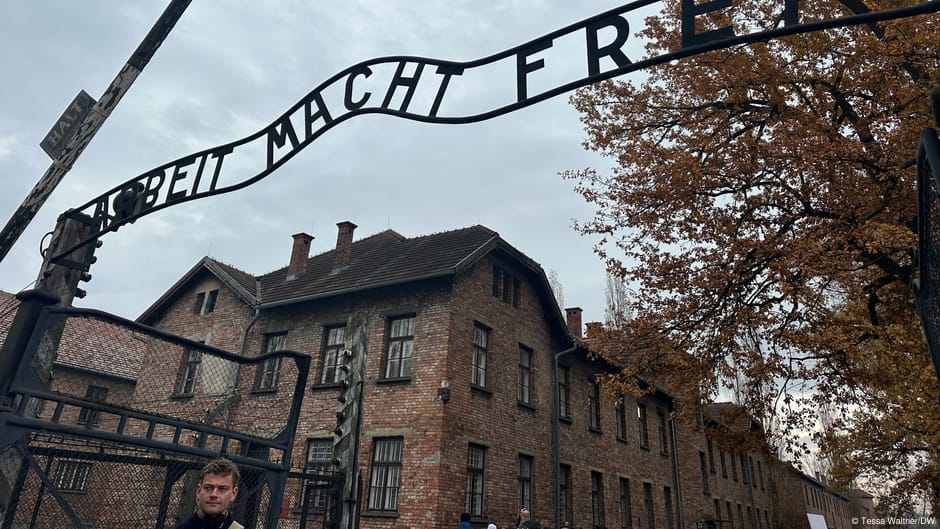
Regina Sluszny, an 87-year-old Holocaust survivor, visited the former Auschwitz concentration camp in a wheelchair. She said the place felt cold both physically and emotionally, and recalled that her husband lost seven family members there.
Sluszny traveled to Poland with the European Jewish Association (EJA), which brought political representatives and Jewish community members to Krakow and Auschwitz on November 9 and 10. The dates coincided with the anniversary of the November Pogroms of 1938, a turning point on the path to the Holocaust. The event’s motto was “Honoring the past, securing the future.” Sluszny and others fear that the Shoah is fading from Europe’s collective memory.
Rising hostility across Europe
At the Krakow symposium, attendees said concern about antisemitism was not only about the past. Many described increased hostility toward Jews and greater fear within Jewish communities across Europe.
French authorities recorded 1,320 antisemitic incidents in 2025, fewer than in 2024 but about three times the 2022 total. In Germany, police-recorded antisemitic crimes rose from 2,641 in 2022 to 6,236 in 2024 and 6,548 in 2025.
Safety and daily life
Ellen van Praagh, chair of the Interprovincial Rabbinate in the Netherlands, called October 7 a turning point. She lost a family member in the Hamas-led attack, in which around 1,200 people in Israel were killed and more than 250 were taken hostage and abducted to the Gaza Strip.
Van Praagh said she no longer feels safe as a Jew in the Netherlands and believes Jews are being blamed for Israel’s actions. Israel began a major military offensive in Gaza after the attack; conservative estimates put Palestinian deaths there since the war began at more than 75,000.
She said Jewish communities’ security measures and protective walls restrict everyday life. Van Praagh said Jews want to live in freedom, while “Never Again” has become an empty phrase with little bearing on their daily experience.
Calls for political action
EJA chairman Rabbi Menachem Margolin urged European political leaders to take greater responsibility. He said their support is essential to Jewish life in Europe, but argued that laws intended to protect it are often not enforced.
Margolin said some officials hesitate to identify antisemitism when it becomes politically inconvenient. He warned that “Auschwitz did not begin with gas chambers. It began with words.” The EJA honored Reza Pahlavi, the exiled son of Iran’s last shah and an opponent of the Islamic Republic, for efforts to combat antisemitism. In accepting the award, Pahlavi called on democratic nations to unite against oppression and ideological extremism.
Key points
- Regina Sluszny returned to Auschwitz with an EJA delegation marking the November Pogroms anniversary.
- France recorded 1,320 antisemitic incidents in 2025; Germany recorded 6,548 antisemitic crimes.
- Jewish attendees described growing insecurity, especially since October 7, 2023.
- EJA chairman Menachem Margolin called for stronger political responsibility and enforcement of protections.