

How fake rocks may boost survival for venomous Australian snakes
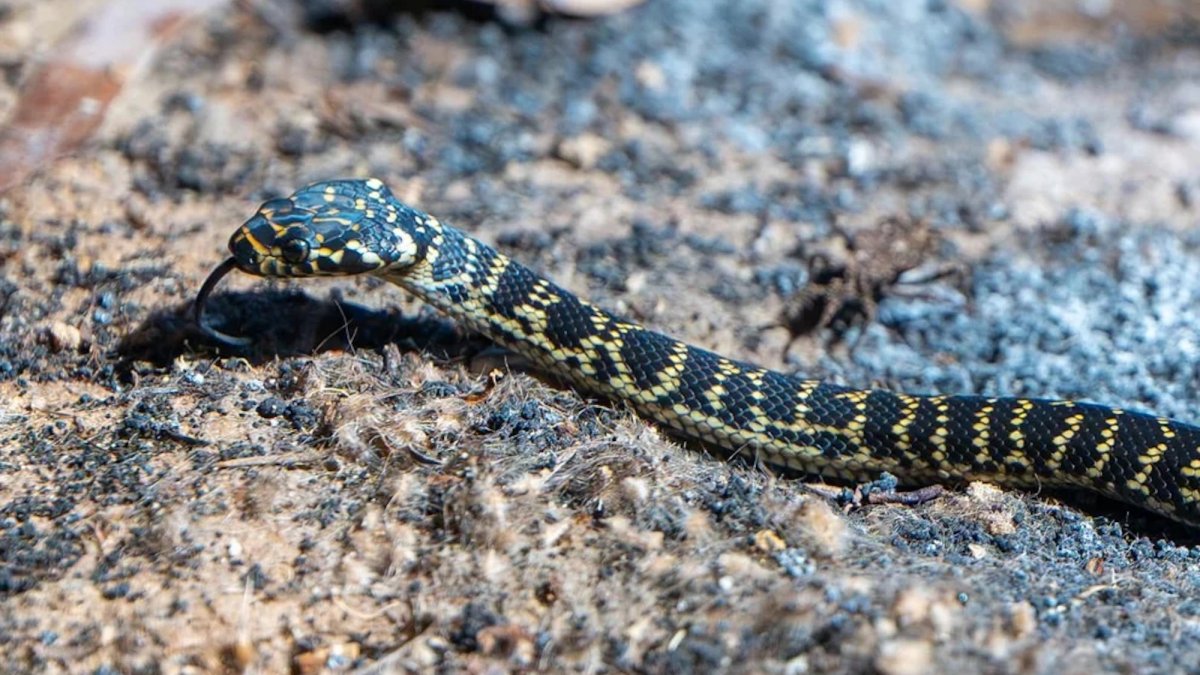
A vulnerable Sydney Basin snake
The broad-headed snake, Hoplocephalus bungaroides, was once common in the Sydney region but had become rare by the 1990s, according to wildlife ecologist Jonathan Webb. It is among Australia’s most threatened species.
The snakes mature slowly, beginning to reproduce at about five years old. Females mate every two or three years, and adults can live up to 23 years in the Sydney Basin, leaving the population vulnerable to disruptions across generations.
Threats to young snakes
More frequent droughts and wildfires, habitat destruction and invasive predators have contributed to the species’ decline. Juvenile snakes are particularly at risk from predators including kookaburras, brown snakes, cats and foxes.
Young broad-headed snakes also rely on bush-rocks for daytime shelter and warmth, as well as access to prey such as skinks and geckos. Removing rocks from the bush for landscaping further reduces their habitat; a single boulder can sell for as much as $450, Webb said.
Artificial shelters in the bush
Researchers placed the released snakes beneath custom artificial rocks. The structures were designed with crevices modeled on natural formations and thermal properties intended to provide warmth and protection; the team also expects them to help attract prey.
Early results and next steps
Four of the six released juveniles survived their initial, most dangerous months outdoors, the researchers reported. Webb described the artificial rocks as critical to the snakes’ survival chances.
Biologists hope to expand the program to other parts of Australia and breed more snakes for release. Aussie Ark founder Tim Faulkner said the program could serve as a model for threatened-species conservation across the country.
Key points
- Four of six released juvenile snakes survived their first months outdoors.
- Custom artificial rocks provide shelter and warmth for the nocturnal snakes.
- Bush-rock removal, habitat destruction, drought, fires and predators threaten the species.
- Researchers hope to expand the breeding and release program across Australia.