

A book sheds light on camps linked to colonial Australia’s most ruthless killing machine
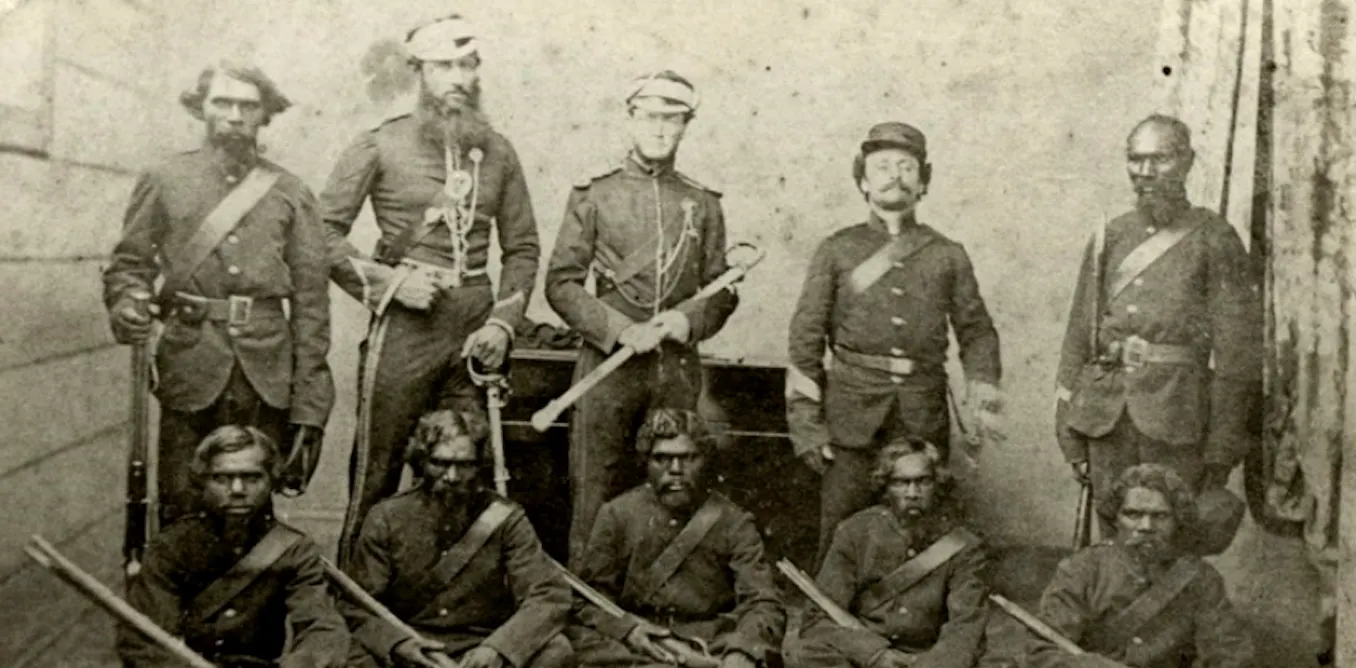
A force and its history
The review describes the force as possibly colonial Australia’s most ruthless killing machine and says more than 40,000 people may have died violently over roughly 80 years. It presents Buried as an investigation by Heather Burke, Lynley A. Wallace and Bryce Barker, combining archaeology with history and, to a lesser extent, anthropology.
What the camps revealed
The researchers surveyed 26 camps over four years, from 2016 to 2020, and excavated eight. Their work involved thousands of kilometres of travel and extensive excavation, supported by substantial funding.
Among the thousands of recovered objects, common finds included ornate gold buttons bearing government insignia and fragments of crockery, such as dinner plates, serving dishes and egg cups. The reviewer characterizes the discoveries as strange, sometimes disappointing and often mundane.
Limits of the investigation
The book focuses on the police base camps rather than the force’s operations in the field. The review says more than 300 pages contain only one reference to monthly patrols, where collisions and “dispersals” frequently occurred.
The authors say they did not set out to excavate massacre sites, citing their elusive nature. The reviewer contrasts this decision with archaeological work at massacre sites and a prison for Aboriginal people at Forrest River and Rottnest Island, where buried bodies were found.
Earlier research overlooked
The reviewer questions the book’s lack of reference to C. D. Rowley’s 1970 study, The Destruction of Aboriginal Society. Rowley cited the Native Mounted Police nearly 100 times and concluded that the force “offered the perfect niche for the sadist”.
The review also recalls anthropologists who helped build early research on frontier conflict, including D. J. Mulvaney, Catherine and Ronald Berndt, and W. E. H. Stanner. Stanner used the 1986 ABC Boyer Lectures to describe a national “cult of forgetfulness” about race relations.
Key points
- Buried studies Queensland Native Mounted Police base camps using historical archaeology.
- Researchers surveyed 26 camps and excavated eight between 2016 and 2020.
- The review says the book does not examine massacre sites or field activities in depth.
- The reviewer notes the omission of C. D. Rowley’s influential 1970 study.