

With Another Surgery Ahead, Veterinarian Seeking Relief From Chronic Pain Tries Hypnosis
An injury with lasting effects
Hudnall was working as a veterinarian when he felt a sharp pain and heard a pop while helping deliver a calf. He later underwent several operations intended to relieve pressure on nerves, but pain intensified as sensation returned.
He described the pain as recurring electrical pulses. It became so severe that he considered amputating his arm, he said. Chronic pain is defined as pain that continues for more than three months. About one in four U.S. adults experiences it, and most people with chronic pain are still suffering a year later.
How pain can persist
A painful event such as a burn sends electrical signals through nerves toward the spinal cord and then the brain, where the signals are interpreted as pain. For many people, the sensation ends when the original stimulus is gone, but that does not happen for everyone.
Researchers around the world are investigating the condition. Over 35 years, thousands of chronic-pain studies have appeared in more than 900 journals across 86 countries. Treatment research includes devices that stimulate the vagus nerve in the neck, with the aim of reducing pain linked to rheumatoid arthritis or migraines. Scientists are also testing non-opioid medicines that block sodium channels in nerve cells, interrupting signals headed toward the brain.
Training the brain at home
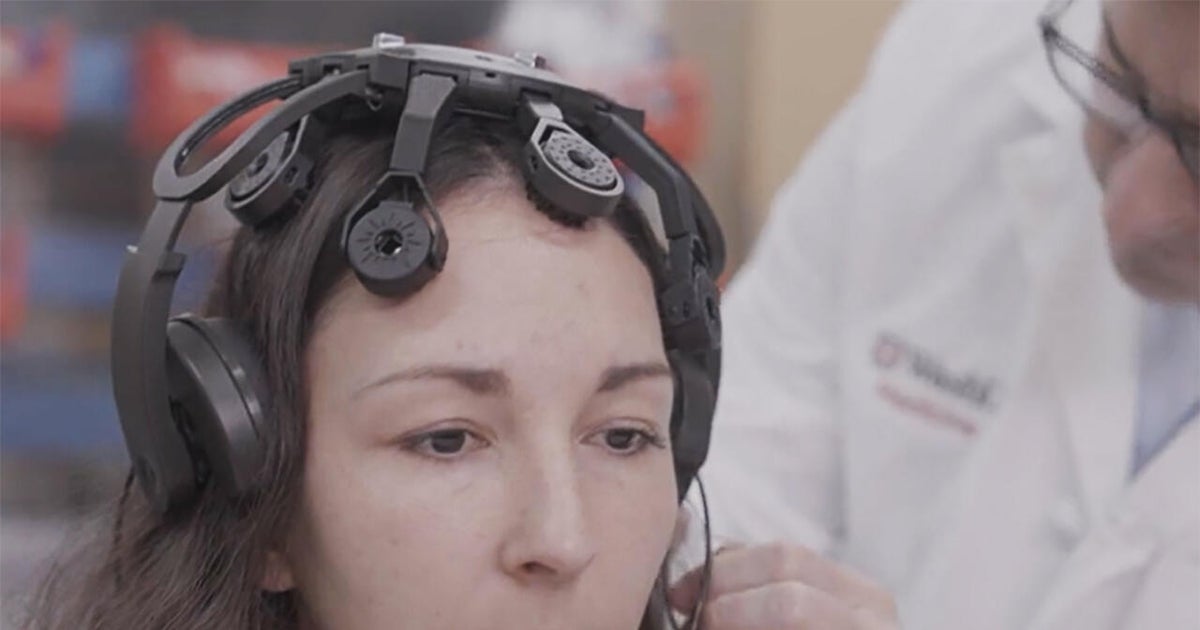
At Washington University, doctors Eric Leuthardt and Simon Haroutounian have developed a headset designed for home use. It uses biofeedback to help patients raise brain-wave activity associated with less pain.
Haroutounian said a pilot involved about six people whose chronic pain had not responded to treatments such as surgery or medication. He reported that each participant experienced some improvement.
Leuthardt said the device is not a drug, is non-addictive and has no pathological side effects. He described it as a way for patients to help retrain their own neural circuits, though the research remains at an early stage and the headset is not ready for Hudnall.
Hypnosis and daily life
Since last May, Hudnall has been working with pain psychologist Sarah Buday on hypnosis. Buday said clinical hypnosis teaches self-hypnosis through deep relaxation and suggestions about pain, its quality and the emotions surrounding it.
With self-hypnosis, Hudnall recently managed to endure another surgery. He said he is trying to stay positive about what comes next. Lara Crock said even partial pain relief can make a major difference to everyday life. Being able to get up, take a child to school or share a meal with family can be preferable to spending the day in bed.
Key points
- Hudnall’s severe pain began during a calf delivery in 2022 and continued after multiple surgeries.
- About one in four American adults lives with pain lasting more than three months.
- Researchers are studying vagus nerve stimulation, sodium-channel-blocking drugs and brain-wave biofeedback.
- Hudnall is trying self-hypnosis, while the Washington University headset remains in early research.