

Celebrate fall flavors with three spicy recipes featuring kimchi’s changing character
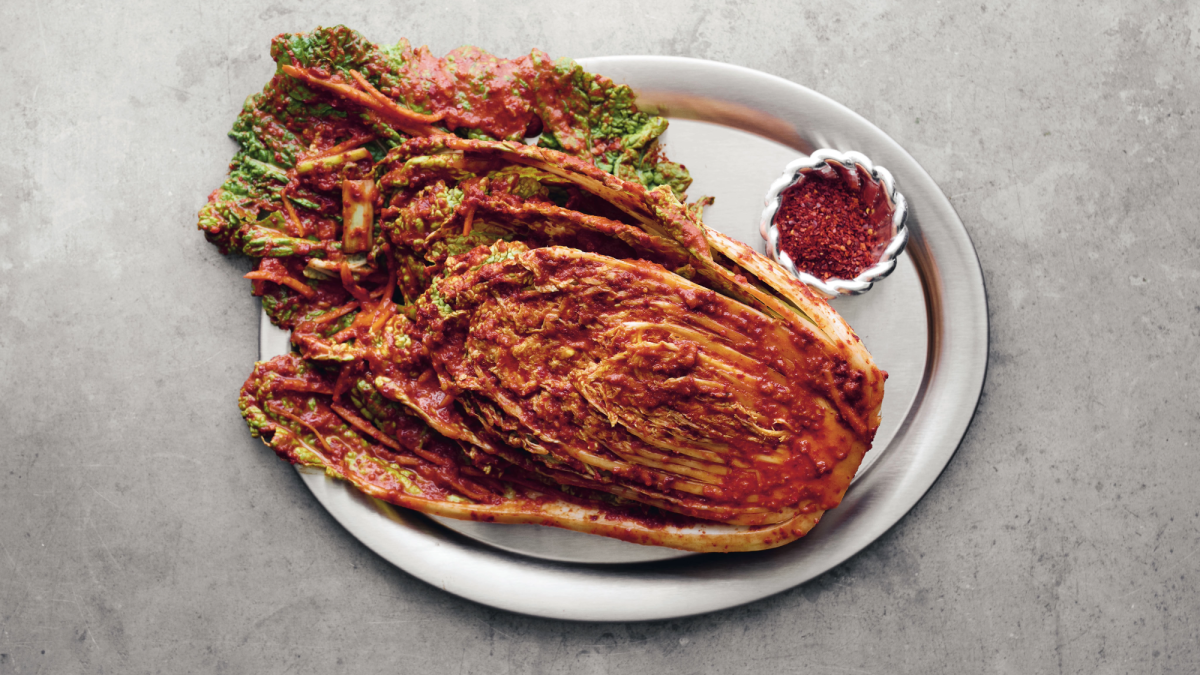
Kimchi for the fall season
In Korea, families gather each autumn for kimjang, making and sharing large batches of kimchi for winter. This recipe is baechu kimchi, prepared with napa cabbage, and takes 30 minutes of preparation, two hours of standing, and eight to 16 days to ferment.
The recipe lists fish sauce and fermented shrimp as optional. Soy sauce can replace the fish sauce for a plant-forward version, while Asian pear, radish, carrot, scallions, garlic, ginger, and gochugaru form part of the seasoning paste.
How fermentation changes kimchi
Fresh baechu geotjeori is crisp and has a bright gochugaru flavor. It can be served with steamed rice, salads, or bibimbap. After a month, kimchi becomes sour and piquant, and can be used in pancakes, soup, or Korean fried rice. Older, soured kimchi suits richer stews, including kimchi jjigae and mukeunji jjigae, a slow-braised pork stew.
Gochugaru brings chile flavor
Gochugaru is chile powder used specifically for kimchi. It may be made from different local chile varieties to reflect regional preferences; mild, dried red hong gochu is described as a suitable base.
Cheongyang gochu, grown in Cheongyang in South Korea, is a cross with spicy Thai chiles and can be added for more pungency. Traditionally, red hong gochu are dried in the autumn sun, then split and cleaned before being milled into flakes or coarse powder.
A quick fried-rice option
Kimchi fried rice uses matured kimchi and can be made with leftover rice or rice cooked for the dish. The recipe says day-old rice works best; rice can be dried for several hours or refrigerated before cooking.
The listed ingredients include rice, ground beef or firm tofu, and gochujang. The directions begin by cooking and seasoning the rice with sesame oil, then spreading it out to dry before stir-frying the protein.
Key points
- Kimjang is a Korean autumn tradition of making and sharing kimchi for winter.
- The kimchi recipe takes two hours of standing and eight to 16 days to ferment.
- Fresh kimchi is crisp; older kimchi becomes sour and suits stews and cooked dishes.
- Kimchi fried rice can use beef or firm tofu and works best with day-old rice.