While eucalypts are hard to kill, climate change could test others’ ability to survive severe fires
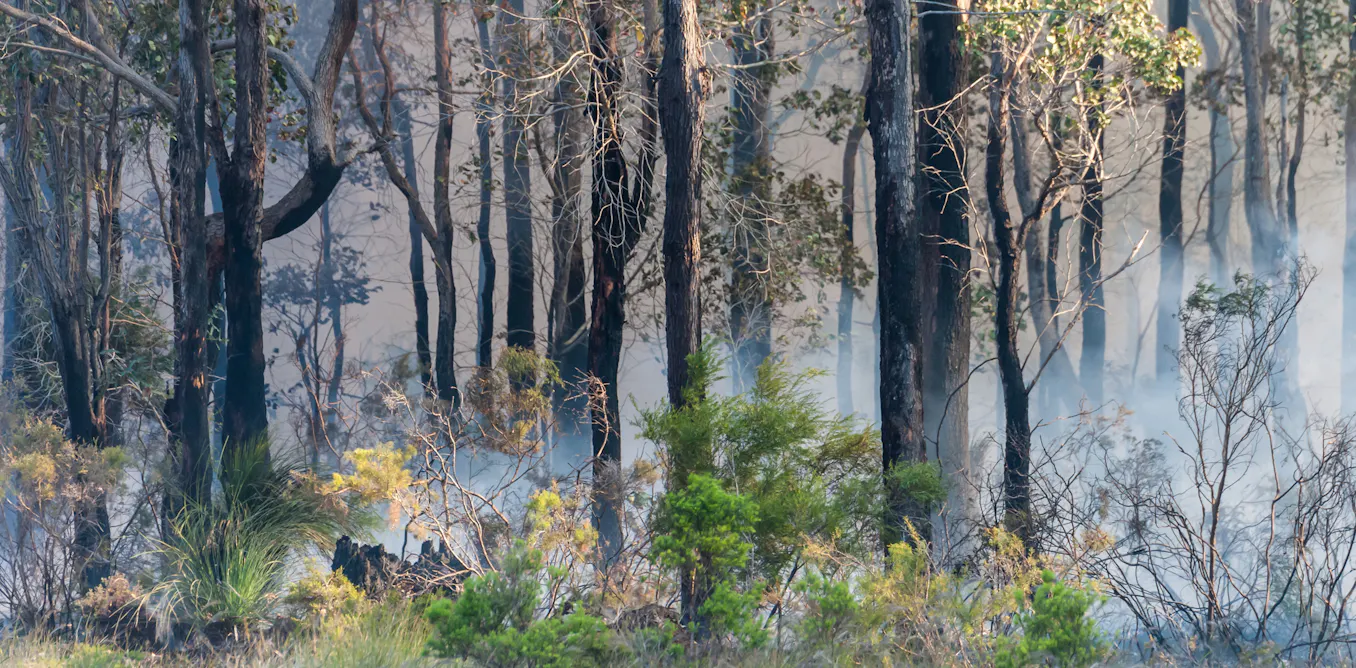
Why large eucalypts matter
Eucalypts help cycle nutrients and store carbon, while providing shelter and hollows for animals such as the yellow-bellied glider and glossy black cockatoo. Large, old trees are especially important to healthy ecosystems.
Different forests, different outcomes
Researchers examined forests affected by the Black Summer fires, measuring seedling recruitment and topkill—the loss of a tree’s trunk and branches when it survives by resprouting from its base. Field sites ranged from northern New South Wales to East Gippsland in Victoria.
Dry forests on poorer soils had fewer large trees die and more young trees survive than wet forests on more fertile soils. Wet forests lost many of their biggest trees through topkill or complete mortality.
Species face varied risks
Eucalyptus dalrympleana and Eucalyptus radiata experienced higher mortality and topkill at the dry edge of their ranges. Eucalyptus dives had average damage across its range, regardless of the climate where it grew.
Seedling recruitment was generally lower in drier areas, although results differed by species. Researchers said forests at risk of losing large trees may need greater attention in fire management, as recovery can take decades or severe fires may cause more lasting change.
Key points
- Black Summer fires burned roughly seven million hectares of eucalypt forests in eastern Australia.
- Wet forests lost many large trees, while dry forests on poorer soils proved more resilient.
- Two studied species had higher mortality and topkill at the dry edge of their ranges.
- Some eucalypt forests may take decades to recover after severe fires.