To Curb Lake Erie Algal Blooms, Tackling Pollution Requires Targeted Conservation Strategies
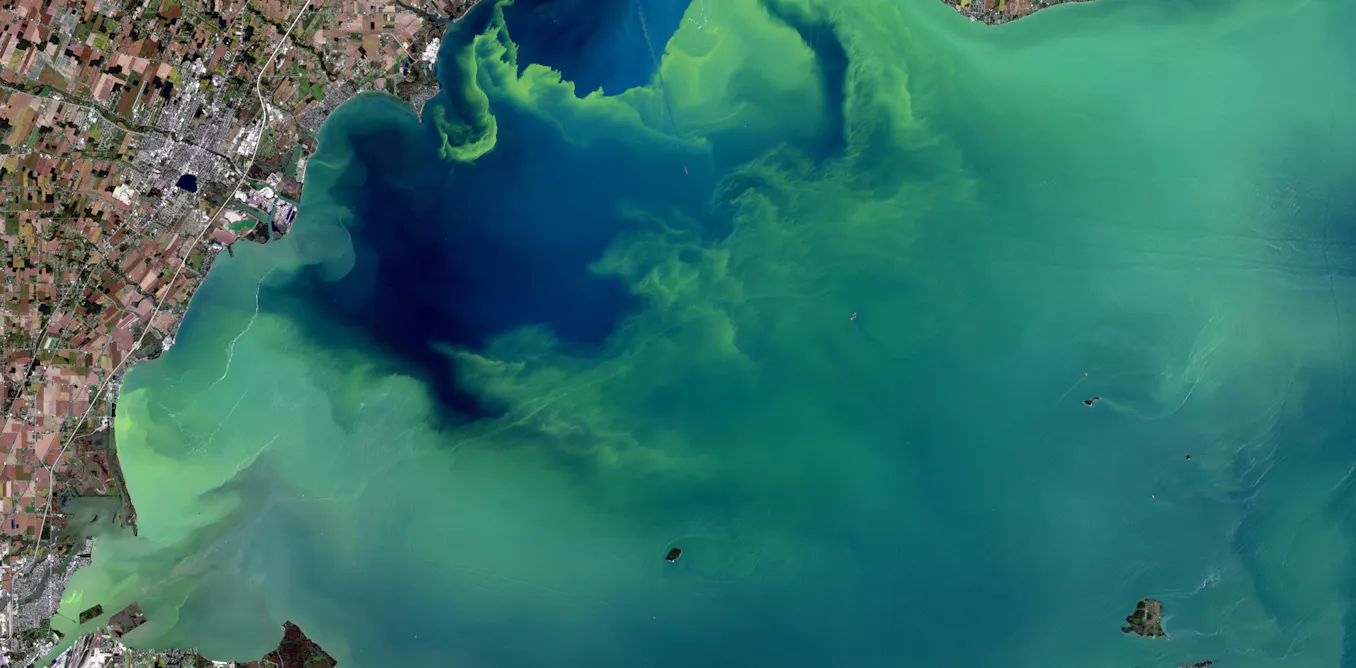
Why nutrient pollution matters
Lake Erie’s periodic algal blooms can cause rashes and other health problems, and they threaten people and animals. Excess phosphorus and nitrogen can fuel blooms, which lower oxygen in the water and put drinking water, fisheries and tourism-dependent communities at risk.
Many nutrients come from nearby farms. Unlike pollution from a single pipe, agricultural runoff comes from many fields and reaches waterways through several routes, including stormwater, snowmelt and underground drain tiles.
In 2016, Canada and the United States set a goal of reducing phosphorus entering the lake’s western and central basins by 40 per cent compared with 2008 levels. Recent reporting says the target remains largely unmet.
Mapping needs across Medway Creek
In 2025, researchers studied the tile-drained Medway Creek agricultural watershed in southwestern Ontario. They examined fields, terrain, soils, crop history and drainage information, then used a mapping tool to locate potential conservation sites.
The team surveyed 138 agricultural fields, looking for erosion, ponding, poor drainage, concentrated water flow and degraded streamside areas. Machine-learning models extended the assessment across the watershed to identify fields that could be priorities for planning.
A high ranking for conservation need does not show that a field produces the most nutrient pollution. Researchers described the rankings as a starting point for further assessment.
Different losses, different practices
Possible measures include grassed waterways and water and sediment control basins for overland runoff. Tile-drained fields may be suited to controlled drainage, denitrifying bioreactors or phosphorus filters, while fields beside streams may need riparian restoration. Some locations may require more than one measure.
Conservation choices also depend on land, money and time, so not every practice can be used everywhere. Precision conservation uses data, field knowledge, watershed models and local experience to match measures to suitable places.
Planning for combined benefits
A separate framework ranked options for each field by conservation need, landscape suitability and stakeholder priorities. In Medway Creek, controlled drainage ranked highest, while the suitability of other practices depended on soil, slope, drainage, nutrient pathways and local priorities. Existing conservation measures were already benefiting water quality.
Key points
- The 2016 phosphorus-reduction target for Lake Erie’s western and central basins remains largely unmet.
- Researchers assessed 138 fields in Ontario’s Medway Creek watershed.
- Modelled phosphorus losses were concentrated in fewer fields than nitrogen losses.
- A combined package of practices could balance nitrogen and phosphorus reductions in 47 per cent of modelled fields.