A Glacier-Side Landslide Sent Monster Tsunami Water 1,580 Feet Up Alaska’s Mountain
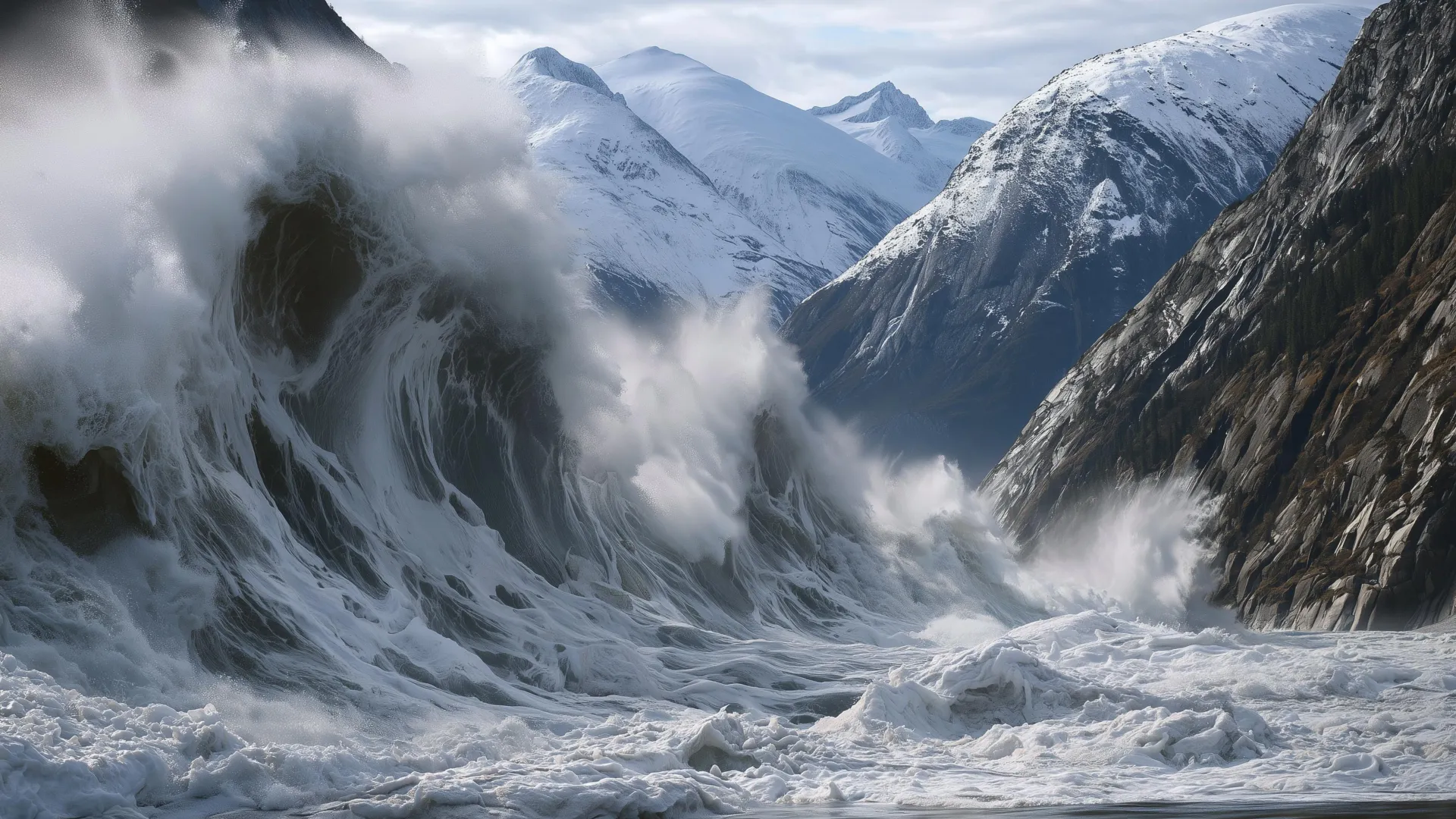
A wave climbs the fjord wall
Passengers aboard the Hanse Explorer left the South Sawyer Glacier area on the evening of Aug. 9, 2025. About 12 hours later, a landslide from a nearby mountain plunged into the fjord, setting off a tsunami.
The wave and debris surged 1,580 feet, or 481 meters, up the opposite slope, then traveled down Tracy Arm. Its force stripped the fjord walls to bare rock. The event was the second-highest tsunami in recorded history.
The collapse occurred shortly after 5 a.m., when no ships were nearby. In the months that followed, some cruise lines began avoiding Tracy Arm.
Warning signs before collapse
Researchers also recorded thousands of small seismic tremors in the days before the collapse. In the hours beforehand, seismic activity rose exponentially and shifted into a continuous signal known as seismic tremor.
The researchers say those conditions could have supported staged warnings: a broad yellow alert as weather and glacier retreat raised the hazard, followed by an orange warning as seismic signals intensified. They say the later signs could have justified advising ships to stay out of the fjord.
A wider Arctic hazard
Landslides are frequent in Alaska’s coastal mountains, where tectonic uplift and long-term ice loss meet erosion from rain and moving glaciers. Several recent major slides have occurred at the ends of retreating glaciers, though the processes behind the pattern remain poorly understood.
When millions of tons of rock hit water, their momentum can generate tsunami waves. Similar events are occurring from Alaska to Greenland and Norway, sometimes with deadly outcomes.
Key points
- A landslide in Tracy Arm sent water and debris 1,580 feet up the fjord wall.
- The collapse followed rapid glacier retreat, heavy rain and increasing seismic activity.
- No ships were nearby, but some cruise lines later avoided Tracy Arm.
- Researchers say staged alerts could warn ships and nearby communities of elevated landslide risk.