Cold Season Can Bring One Virus After Another: Essential Items to Stock in Your Medicine Cabinet
Prepare before symptoms begin
Fall and winter bring more common respiratory viruses, including colds, flu, RSV and COVID-19. Pediatrician Mona Amin says cooler temperatures and drier conditions may contribute to illness, including back-to-back infections.
Pharmacist Alisha Reed recommends keeping supplies in one convenient place, such as a medicine-cabinet shelf or a sick-day box. That way, people who become ill can find what they need without making an urgent trip to a drugstore.
Many viral illnesses and fevers can be managed at home, Amin says. Antibiotics do not treat colds or flu, which are viral infections. Disinfecting frequently touched surfaces, washing hands and getting vaccinated can help prevent illness, though Reed cautions that no prevention method is foolproof.
Choose medicines by symptom
Reed advises against reaching first for products that combine treatments for several symptoms. They may include ingredients a person does not need and raise the risk of taking too much.
For pain, non-steroidal anti-inflammatory drugs such as ibuprofen or naproxen can ease headaches, body aches and sore throats. Acetaminophen and ibuprofen can reduce fever, with acetaminophen usually the preferred option for fever.
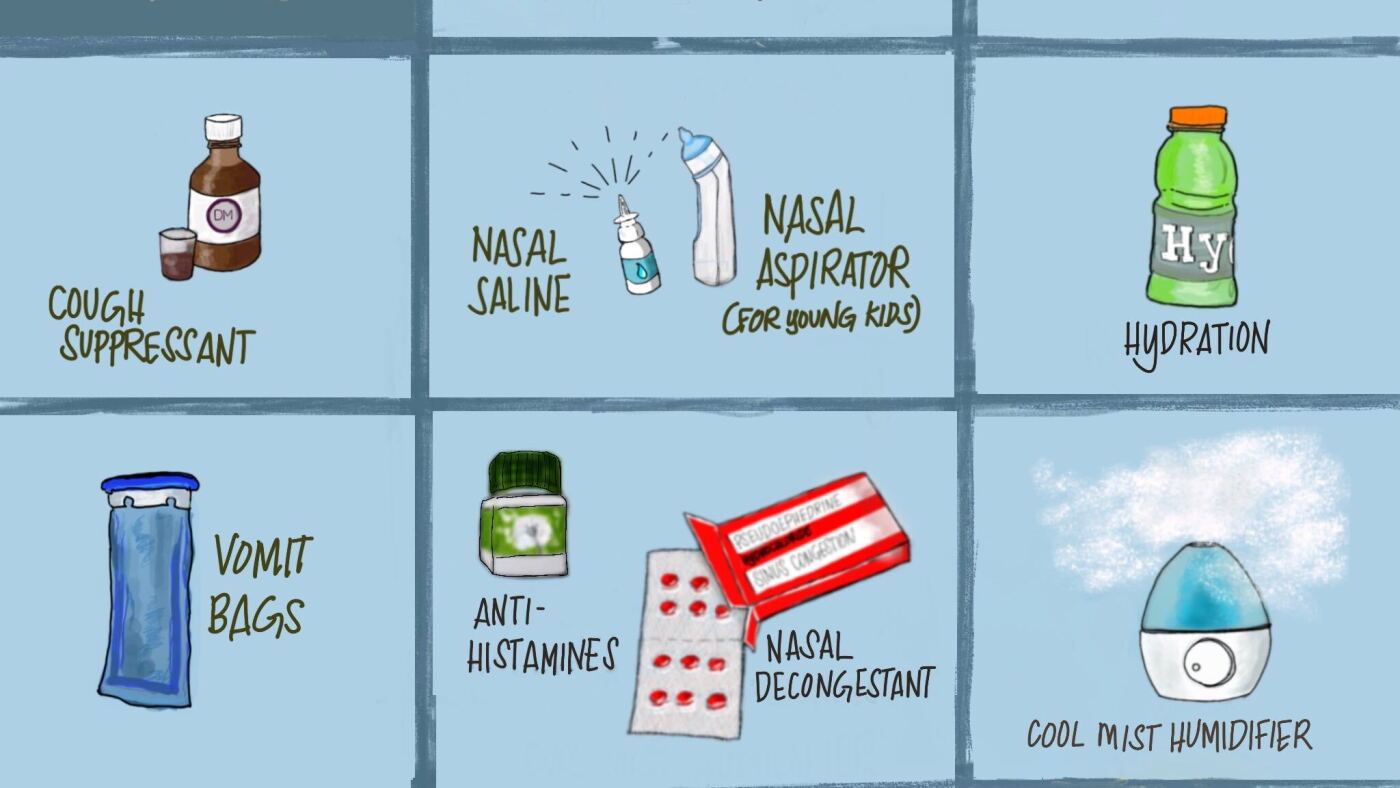
Antihistamines may help with sneezing, runny noses and watery eyes. Pseudoephedrine pills or nasal sprays can ease nasal congestion and sinus pressure. For a dry cough, dextromethorphan can temporarily suppress the cough reflex; guaifenesin may thin mucus in the airways. Reed also recommends trying hydration for chest congestion, calling water a natural expectorant.
Check age guidance for children
Children’s medication rules vary by product. Ibuprofen should not be used for children under 6 months, and naproxen is approved only for children 12 and older. For fever, use a children’s product for those 12 and under and follow the dosing chart for children’s acetaminophen.
Decongestant pills are not recommended for children under 4, and medicated nasal sprays are not recommended under 6. Cough medicines are not recommended under 4 and should not be used under 2, according to the American Academy of Pediatrics.
Build a kit within budget
A household kit can include pain and fever medicines, hydration supplements and tools for monitoring symptoms. The recommended items can be costly, so people without a flexible spending account may begin with the supplies they consider essential and add more when they can.
Key points
- Cold and flu season in the United States lasts from October through May.
- Keep household supplies together so they are easy to reach when illness starts.
- Choose medicines for individual symptoms to reduce the chance of taking unnecessary ingredients.
- Children’s medication age limits differ, so check product guidance and consult a care provider when unsure.