Ukrainian soldier to go on trial over sabotage of Nord Stream gas pipelines
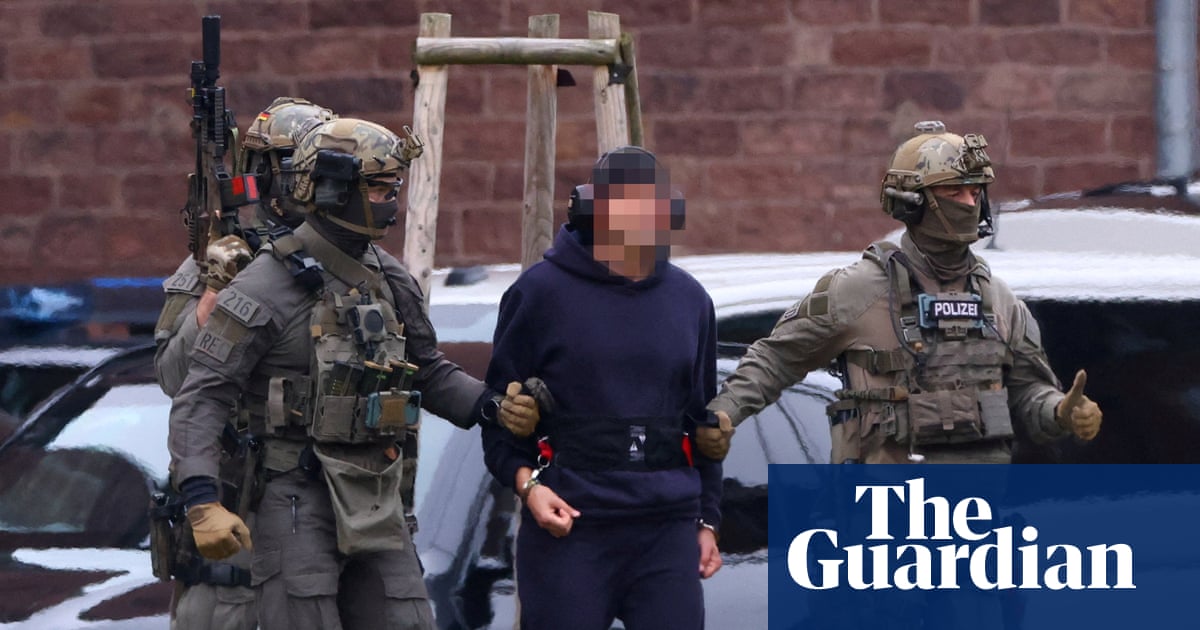
Special forces officer Serhii Kuznetsov denies involvement in the 2022 blasts that left pipelines badly damaged
A Ukrainian soldier is to go on trial in Hamburg accused of taking part in one of the most brazen acts of sabotage in postwar European history – the 2022 attack on the Nord Stream gas pipelines between Russia and Germany.
Kuznetsov, who will be identified in the trial opening on Wednesday just as Serhii K due to German privacy laws, was referenced by his full name in an extradition order. He is alleged to have prepared and carried out the detonation of at least four incendiary devices of up to 27kg in weight at a depth of about 80 metres under the Baltic Sea, close to the Danish island of Bornholm.
The explosions took place on 26 September 2022, badly damaging the pipelines which had been constructed to carry Russian natural gas between Vyborg in western Russia and Lubmin, near Greifswald in northern Germany.
The blasts caused the Nord Stream 1 pipelines – Russia’s main gas supply route to Germany before Moscow cut the supplies in August 2022 – to burst. They also damaged Nord Stream 2, which was ready to carry gas but was never put into operation after Germany suspended its authorisation process just before Russia’s full-scale invasion of Ukraine.
They exposed the dependence of Europe – and, in particular, Germany – on Russian gas as well as highlighting the murkiness of underground operations during wartime.
However, in July German state prosecutors accused Ukrainian “state authorities” of ordering the attack, arguing: “The aim was to permanently halt gas supplies via the pipelines and prevent Russia from using the revenue from natural gas trade to finance its war effort.”
Kuznetsov was arrested in August 2025 on a family holiday in Italy, with Italian police reporting that he surrendered without resistance. He had been travelling on a false passport. He was extradited to Germany last November, after legal efforts to prevent this failed.
Aware of how potentially incendiary the trial could be, with Ukraine effectively in the dock for a crime committed against its ally – and one of its staunchest wartime supporters – the German government has declined to comment on the trial.
The trial is attracting much attention, not least because Nord Stream was already a highly controversial issue before the attack, involving Russia’s leader, Vladimir Putin, who, with the then German chancellor, Gerhard Schröder, managed to bypass Ukraine as a transit country with Nord Stream 1. After Schröder left the chancellery, Putin appointed him as chair of the supervisory board of the company Nord Stream AG. Schröder was seen last week attending Putin’s birthday celebration.
A request by the Russians to participate as co-plaintiffs in the Hamburg trial was rejected by the court. The company Gazprom, which owns the Nord Stream 2 pipeline, had argued its right to do so due to what it has referred to as the severe economic consequences resulting from the attack. The court argued that while repair costs of the pipelines would be high, it would not be economically impossible to restore them.
His legal team is expected to produce affidavits from two of his military superiors to support the argument that he is prohibited from revealing details of his actions as a soldier.
Dive deeper
- Special forces officer Serhii Kuznetsov denies involvement in the 2022 blasts that left pipelines badly damaged
- A Ukrainian soldier is to go on trial in Hamburg accused of taking part in one of the most brazen acts of sabotage in postwar European history – the 2022 attack on the Nord Stream gas pipelines between Russia and Germany.
- Kuznetsov, who will be identified in the trial opening on Wednesday just as Serhii K due to German privacy laws, was referenced by his full name in an extradition order. He is alleged to have prepared and carried out the detonation of at le
- The explosions took place on 26 September 2022, badly damaging the pipelines which had been constructed to carry Russian natural gas between Vyborg in western Russia and Lubmin, near Greifswald in northern Germany.
- The blasts caused the Nord Stream 1 pipelines – Russia’s main gas supply route to Germany before Moscow cut the supplies in August 2022 – to burst. They also damaged Nord Stream 2, which was ready to carry gas but was never put into operati