Iran: Political infighting deepens as economic woes mount during war
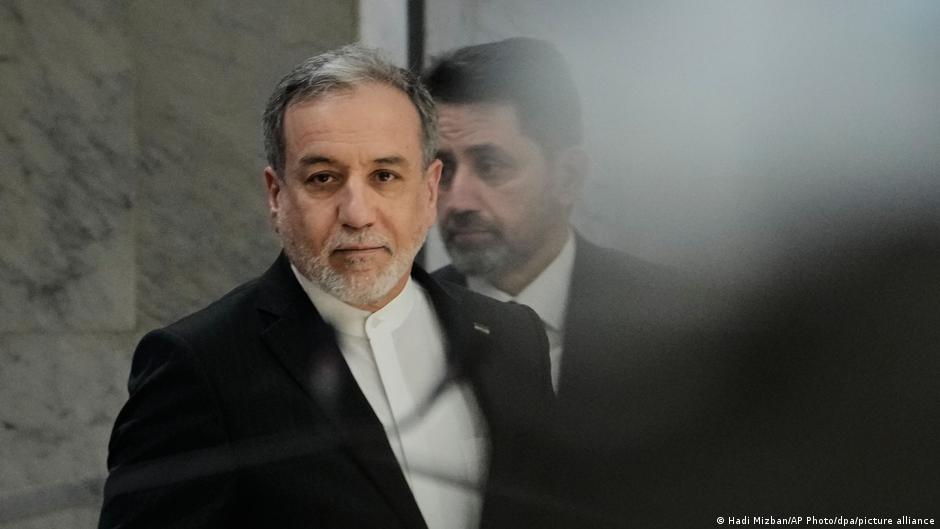
Hardliners are stepping up pressure on Iran's government and calling for Foreign Minister Abbas Araghchi's removal. The oil minister resigned, but that's doing little to ease the pressure on President Masoud Pezeshkian.
Hardliners are piling the pressure on Iran’s government and calling for the removal of Foreign Minister Abbas Araghchi. Oil Minister Mohsen Paknejad’s resignation is also failing to ease the pressure on President Masoud Pezeshkian.
As the war continues and diplomatic efforts to find a solution make little headway, the internal power struggle is intensifying. President Pezeshkian’s government is the focus of mounting tension.
Hardliners in Iran's parliament are pushing for impeachment proceedings against Araghchi. A trigger for the discontent was Araghchi's meeting with US negotiators on the sidelines of the United Nations General Assembly in New York. Critics accuse the foreign minister of holding the talks without official authorization.
In a letter, Tehran lawmaker Amirhossein Sabeti informed parliamentary speaker Mohammad-Bagher Ghalibaf that he had registered a motion to impeach Araghchi on parliament’s online portal. Lawmaker Hossein-Ali Haji-Deligani also said parliament could use its oversight powers, including impeachment proceedings.
"When the regime is forced to negotiate, as it is in the current situation and in talks with the United States, the supreme leader or the hardline core of power avoids taking responsibility and shifts it onto elected institutions and moderate forces within the government," political analyst Ali Afshari, who lives in the United States, told DW.
Hardliners can use this approach to attack moderate factions over decisions that were previously agreed upon within the power apparatus, Afshari said.
He added that hardliners serve an important function within the Islamic Republic.
"The role of hardliners in the Islamic Republic is to influence public opinion, the political system's traditional supporters and the values of the Islamic Republic in both domestic and foreign policy," he said.
Hardliners held a parliamentary majority during the implementation of the Joint Comprehensive Plan of Action (JCPOA), the 2015 nuclear deal, and voiced their political opposition. Their resistance, however, ultimately did not affect the signing of the agreement.
"The Foreign Ministry is not a decision-maker. It implements what the government asks of it — and Araghchi is operating within that framework," Afshari said.
Lawmakers must first collect a set number of signatures to move forward with impeachment proceedings.
Dive deeper
- Hardliners are stepping up pressure on Iran's government and calling for Foreign Minister Abbas Araghchi's removal. The oil minister resigned, but that's doing little to ease the pressure on President Masoud Pezeshkian.
- Hardliners are piling the pressure on Iran’s government and calling for the removal of Foreign Minister Abbas Araghchi. Oil Minister Mohsen Paknejad’s resignation is also failing to ease the pressure on President Masoud Pezeshkian.
- As the war continues and diplomatic efforts to find a solution make little headway, the internal power struggle is intensifying. President Pezeshkian’s government is the focus of mounting tension.
- Hardliners in Iran's parliament are pushing for impeachment proceedings against Araghchi. A trigger for the discontent was Araghchi's meeting with US negotiators on the sidelines of the United Nations General Assembly in New York. Critics a
- In a letter, Tehran lawmaker Amirhossein Sabeti informed parliamentary speaker Mohammad-Bagher Ghalibaf that he had registered a motion to impeach Araghchi on parliament’s online portal. Lawmaker Hossein-Ali Haji-Deligani also said parliame