Women’s football is growing fast — but players still face major gaps
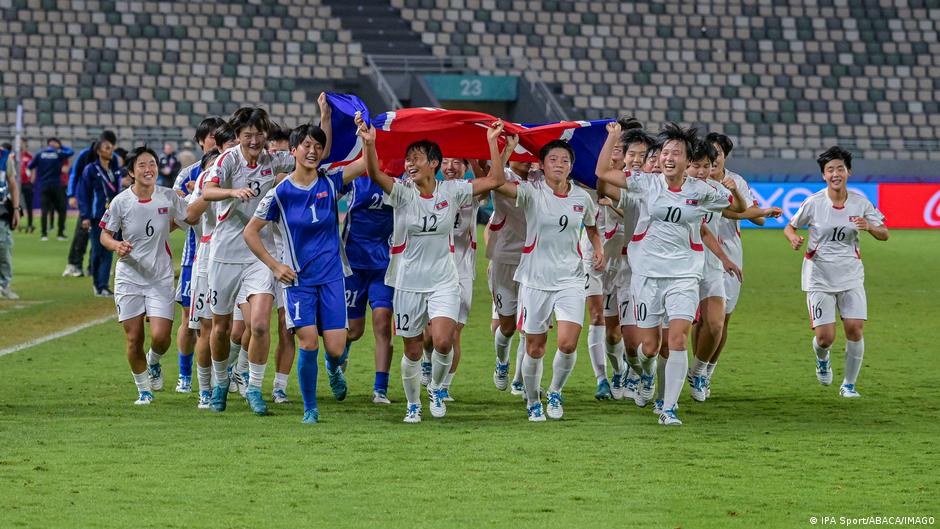
Expected global revenue of over $1 billion and new faces at the U17 World Cup show women's football is booming, but a recent report also highlights need for greater structure globally.
At first glance, women's football is healthier than ever. A recent report by FIFPRO, football's global players' union, said worldwide revenue is expected to reach over $1bn (€894m) in 2027. The World Cup in Brazil, a first in South America, will be the last with 32 teams and is expected to be the most watched and biggest revenue-generating women's tournament ever.
The good news continues with the U17 Women's World Cup in Morocco, where the tournament is being held every year for five straight years. Germany, France, Spain, Brazil, the United States and defending champions North Korea are all at the 2026 edition of a competition whose reputation continues to grow.
"You can just see where the game is going, which is so exciting," US head coach Ciara Crinion told FIFA. "The level has just gone up. We have to continue to stay with that and compete as well. [The U-17 Women's World Cup] almost feels like that first stepping stone in a major tournament for young players, and now you see how serious it is taken."
Puerto Rico, Australia and Argentina are making their debuts. For Puerto Rico, qualification is a moment of history as no football team in the men's or women's game has ever reached a World Cup tournament before.
"We've embraced this idea of being Puerto Rico's first team to qualify for a World Cup," head coach Andres Mirabelli told FIFA. Alongside national development plans, player recruitment was aided by a diaspora of nearly four million in the United States, perhaps the strongest place for women's football in the world. According to FIFPRO, the regional football average salary in North America is $5,940 (€5,547) per month, which is far higher than any other continent.
But even for the handful of players who make it out of these youth tournaments to a professional career, creating a living out of the beautiful game remains a real challenge. The aforementioned FIFPRO report details that many professional female players across the world barely earn minimum wage, with some even falling below it.
The report, which sourced its data from player surveys across the world, found that only 66% of professional players are paid for 12 months a year. The average club contract length is 1.6 years.
"If you know the global average is $2,600, but then the median drops by $1,000 to just over $1,600 so that that gives you an indication of the kind of the salary range that that we're dealing with here," FIFPRO head of research and strategy for women's football Frankie Brown told DW.
"I think what you also find in the women's game is the gaps are not just between the top five leagues and the rest. There is a gap there, but even within leagues themselves [there is one]," said Brown. "In some of the other leagues you're dealing with teams that are operating professionally, so will be paying their players on a reasonable wage, and playing in the same league as them you'll have players that are on amateur contracts and not being paid at all."
With economic and job security an issue for many, the report reveals that psychological stress factors are now the second main reason many consider leaving football.
"This is one of the most concerning parts of the report," Alex Culvin, the director of women's football at FIFPRO, said in a statement. "Of the 49% of women’s football players considering leaving the sport early, 46% cited their mental health as the reason. In interviews, players say the sport's growth brings new pressures – including extra workload and social media abuse - but that clubs do not have the necessary safeguards in place to support these changes. We want clubs and national associations to provide mandatory mental health support focused on wellbeing, which is independent of sportin
Dive deeper
- Expected global revenue of over $1 billion and new faces at the U17 World Cup show women's football is booming, but a recent report also highlights need for greater structure globally.
- At first glance, women's football is healthier than ever. A recent report by FIFPRO, football's global players' union, said worldwide revenue is expected to reach over $1bn (€894m) in 2027. The World Cup in Brazil, a first in South America,
- The good news continues with the U17 Women's World Cup in Morocco, where the tournament is being held every year for five straight years. Germany, France, Spain, Brazil, the United States and defending champions North Korea are all at the 2
- "You can just see where the game is going, which is so exciting," US head coach Ciara Crinion told FIFA. "The level has just gone up. We have to continue to stay with that and compete as well. [The U-17 Women's World Cup] almost feels like
- Puerto Rico, Australia and Argentina are making their debuts. For Puerto Rico, qualification is a moment of history as no football team in the men's or women's game has ever reached a World Cup tournament before.