‘Under tremendous strain’: CIA analyst turned spy novelist on a fraying US-UK alliance
David McCloskey’s new book depicts a calamitous collapse of the ‘special relationship’ – could things get darker still?
The “special relationship”, the time-honored emotional bond between the US and Britain that has sustained through war and peace, is in trouble.
Against that troubled backdrop, David McCloskey, a former Central Intelligence Agency (CIA) analyst turned spy writer and podcast host, has sketched out how things could get darker still. His case – laid out in a new novel – has been reinforced by the serendipity of real events.
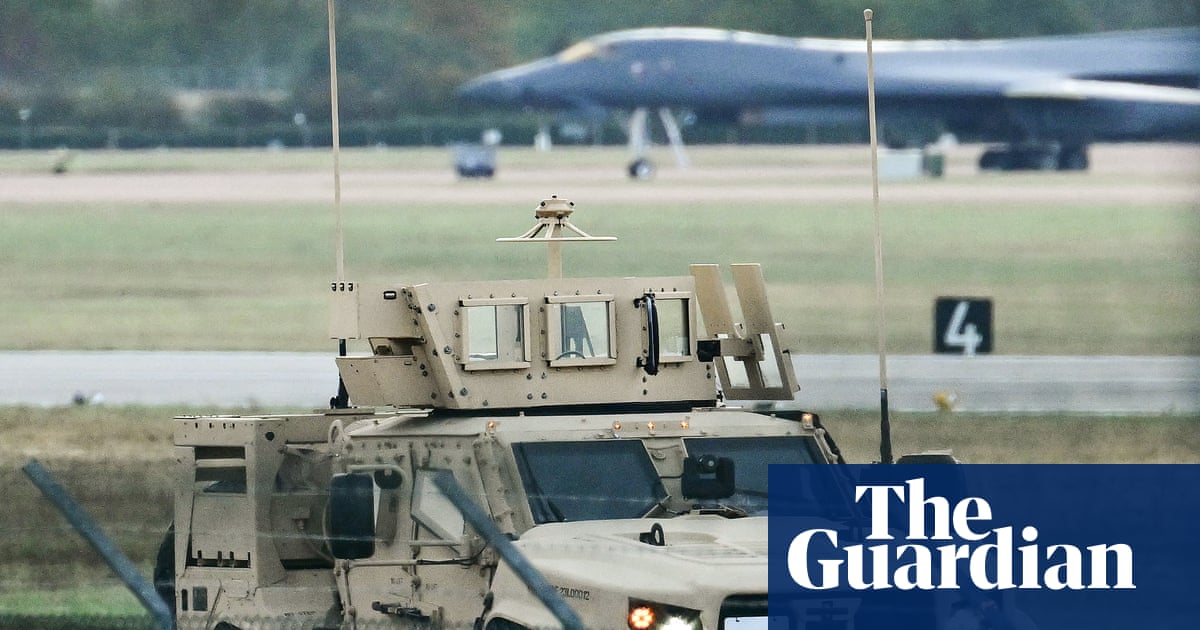
Last weekend, the Trump administration hurriedly withdrew 12 B-1 bombers from a British airbase, RAF Fairford, following intelligence reports that they could be targeted in an Iranian drone attack. The move, presaged by jeering attacks on Britain from some of Trump’s most ardent supporters, reinforced a growing sense of the US pulling back from a strategic partnership that, at times, has been intimate.
McCloskey’s imagined scenario seemed plausible even before recent developments, as two allies that faced the cold war and other conflicts in lockstep drifted apart on a number of fronts, including Russia’s war with Ukraine and Trump’s decision to attack Iran, signaling a geopolitical trend that he calls “fairly alarming”.
The “ton of research” McCloskey carried out while writing uncovered serious fears for the special relationship’s future on both sides, but especially in Britain. “We’re seeing a lot of concern here in London about what do we do with this really hard-elbowed US foreign policy under Trump that seems to minimize the contribution of of allies and sort of pull traditional enemies closer,” he said. “So I think I think the relationship is under a tremendous amount of strain.”
“If I was deep inside Vauxhall Cross [the London headquarters of MI6] working on Russia, and I had a very sensitive piece of intelligence from a sensitive source, would I have more qualms about sharing that with the Americans right now? Probably,” suggested McCloskey, recalling the occasion when Trump reportedly passed on Israeli intelligence to the Russian foreign minister, Sergei Lavrov, during his first presidency.
What he could verify was tension, resentment on the British side at being the junior partner, and – curiously – mutual feelings of intimidation, with US agents being deferential to the UK side’s native abilities.
“For example, if you’re in a third country and you have an [MI6] officer and a CIA officer pursuing the same target, and both services sort of deconflict that, it was almost always the case that the US would win out because it just has more heft and more resources,” he said. “Many of the MI6 [insiders] I interviewed, I think, frankly, resented the [CIA] and didn’t care for it. Yet there was this sense of like, ‘What can I do? We’re very reliant on this partner.’”
The “five-eyes” cooperation agreement – providing signals intelligence-sharing between the US, Britain, Canada, Australia and New Zealand – remains intact, and is likely to survive for the foreseeable future.
Nevertheless, he conceded, things have permanently changed. Tensions between the intelligence services will likely escalate – albeit not necessarily to the extent depicted in London Station – as foreign policy interests of the US and UK go their separate ways.
“There’s are a lot of areas where I could imagine the two intelligence services slightly downshifting their level of exchange.”
Dive deeper
- David McCloskey’s new book depicts a calamitous collapse of the ‘special relationship’ – could things get darker still?
- The “special relationship”, the time-honored emotional bond between the US and Britain that has sustained through war and peace, is in trouble.
- Against that troubled backdrop, David McCloskey, a former Central Intelligence Agency (CIA) analyst turned spy writer and podcast host, has sketched out how things could get darker still. His case – laid out in a new novel – has been reinfo
- Last weekend, the Trump administration hurriedly withdrew 12 B-1 bombers from a British airbase, RAF Fairford, following intelligence reports that they could be targeted in an Iranian drone attack. The move, presaged by jeering attacks on B
- McCloskey’s imagined scenario seemed plausible even before recent developments, as two allies that faced the cold war and other conflicts in lockstep drifted apart on a number of fronts, including Russia’s war with Ukraine and Trump’s decis