Please, sir, can I have a walk? Dickens biographer finds likely inspiration for Oliver Twist
Exclusive: Theresa Musgrove unearths newspaper archives showing one Alice Shepherd was severely punished in 1836 for similarly innocent request
Could a consumptive young woman called Alice Shepherd have been the inspiration for Oliver Twist? That is a question now being posed by a historian, who has discovered parallels between the brutality suffered by a real-life pauper incarcerated in one of Victorian London’s notorious workhouses and Charles Dickens’s fictional orphan.
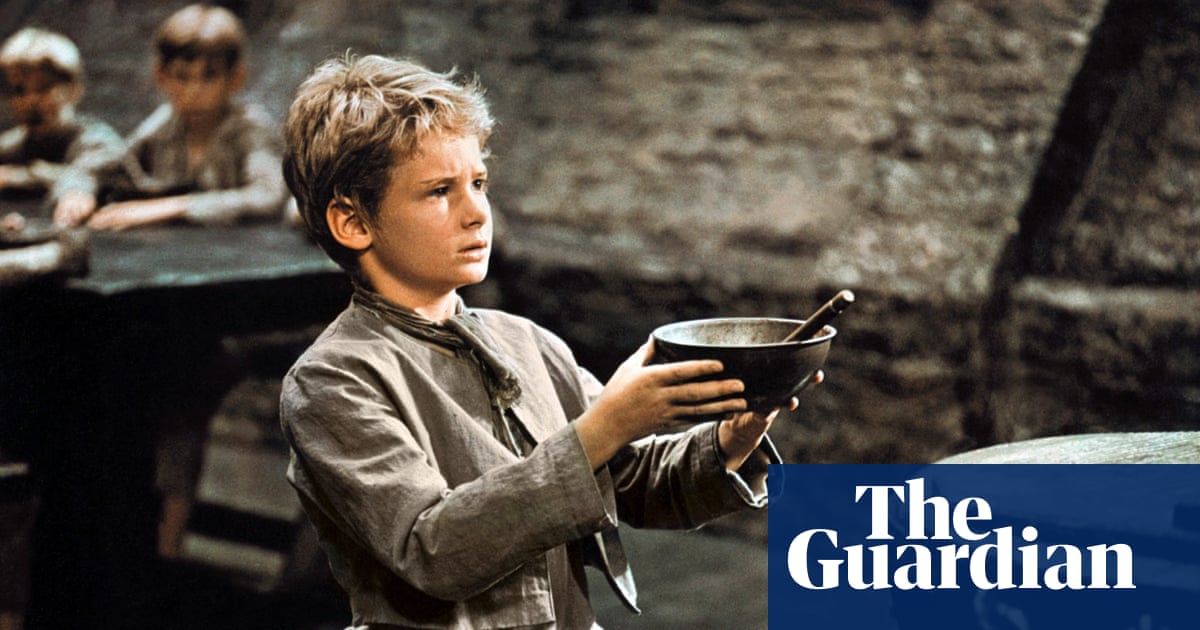
In his classic novel, which was published in monthly instalments from 1837 to 1839, Dickens wrote that nine-year-old Oliver was hauled up before a magistrate and imprisoned in a “dark and solitary room” for having the temerity to ask for a second helping of gruel, with the poignant words: “Please, sir, I want some more.”
Newspaper reports record that Alice Shepherd was put in a “straightjacket”, having been “in a state of great agitation”. A Rev Theodore Williams, in his capacity as a magistrate and chair of the local board of guardians responsible for overseeing the conduct of Hendon’s old workhouse, recommended a punishment for her “disgusting conduct”.
Another local magistrate, also one of the workhouse’s guardians of the board, tried in vain to defend her, arguing that such “a thin spare woman apparently suffering from consumption … [was the] last person … to whom such a punishment should have been inflicted”.
She said: “The reaction to Oliver Twist’s ‘impertinence’ in asking for more food is perhaps an echo of Alice’s daring to ask to go out for a walk: a reasonable request met by fury by those whose job it was to enforce the unremitting authority of the board of guardians, by whose mercy the undeserving poor were granted the means of a life of such bleak subsistence.”
She writes: “Both Oliver and Alice were subjected to solitary confinement, and yet, as we learn, the parish boy’s punishment was to be considered not so bad because he was allowed out into the stone yard to wash under the pump, just as Reverend Williams pointed out … that the room appropriated for the solitary confinement and starvation of Alice Shepherd ‘looked upon the yard where all the other paupers were, and therefore, was not a very severe punishment’.
She notes that Dickens was familiar with Hendon, in the present-day London borough of Barnet: “Hendon and Barnet are mentioned, for example, in Oliver Twist … but also there are other references in his letters and journalism that reveal a knowledge of Hendon and a fondness for the area, which was within walking or riding distance of the city itself, a quiet landscape of villages and farmland.
Oliver Twist exposed the brutality of poverty in Victorian Britain. Dickens became a tireless campaigner for social reform, having been scarred by his own childhood experiences after his father was incarcerated in a debtors’ prison and, aged about 12, he was sent to work in a blacking factory.
He added: “Dickens was a journalist before he was a novelist, so he was well aware of the power of sensation. He was fascinated by the workhouse and aware of what was appearing in the press about particular abuses.”
Dive deeper
- Exclusive: Theresa Musgrove unearths newspaper archives showing one Alice Shepherd was severely punished in 1836 for similarly innocent request
- Could a consumptive young woman called Alice Shepherd have been the inspiration for Oliver Twist? That is a question now being posed by a historian, who has discovered parallels between the brutality suffered by a real-life pauper incarcera
- In his classic novel, which was published in monthly instalments from 1837 to 1839, Dickens wrote that nine-year-old Oliver was hauled up before a magistrate and imprisoned in a “dark and solitary room” for having the temerity to ask for a
- Newspaper reports record that Alice Shepherd was put in a “straightjacket”, having been “in a state of great agitation”. A Rev Theodore Williams, in his capacity as a magistrate and chair of the local board of guardians responsible for over
- Another local magistrate, also one of the workhouse’s guardians of the board, tried in vain to defend her, arguing that such “a thin spare woman apparently suffering from consumption … [was the] last person … to whom such a punishment shoul