Can GLP-1 drugs help stop compulsive shopping, gambling and other ways people throw away their money?
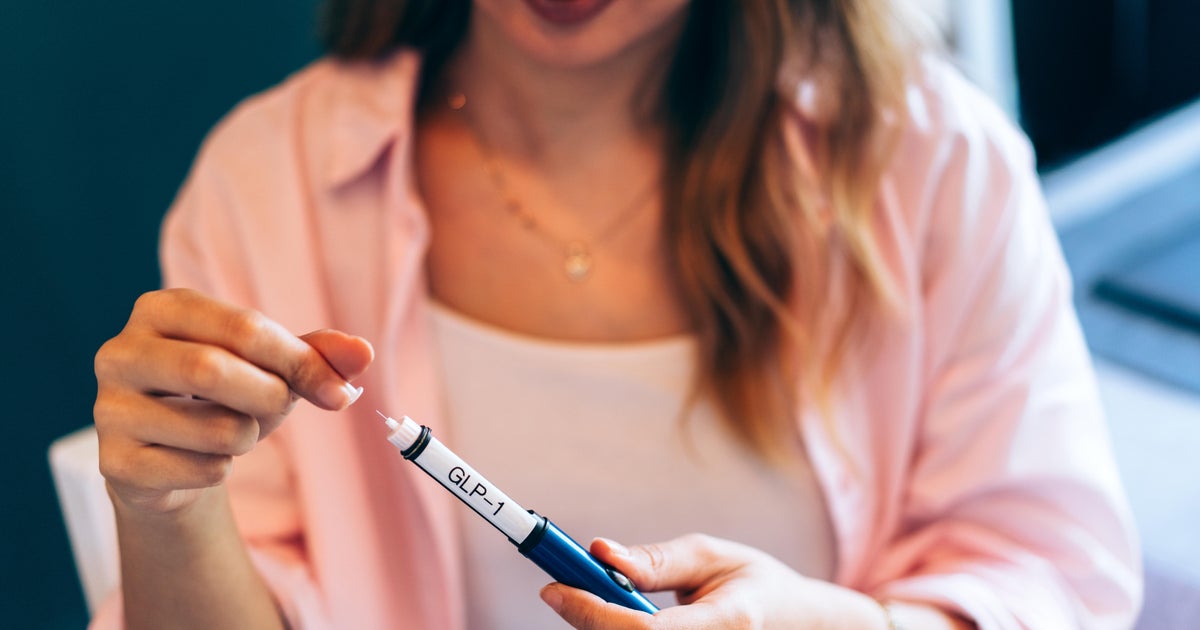
A growing body of research suggests GLP-1 drugs can do more than just help people lose weight by curbing addictive behaviors. Now, experts at the Wharton School of the University of Pennsylvania want to see whether the drugs can benefit people's bank accounts by reducing risky financial decisions, such as gambling or compulsive shopping.
"It might be very good financially for the average person — maybe they're putting more money into savings," he added.
If that proves true, GLP-1s could help Americans resist risky financial decisions and potentially develop better spending and saving habits, Platt said.
The body's reward system "underlies all consumption decisions," he explained. The researchers posit that GLP-1s could make people more responsible decision-makers through a simple injection, a habit that might otherwise take years to cultivate on their own, Platt said. That hypothesis stems from earlier research by Geoff Cook, the CEO of Noom, a digital health company that is funding the Wharton study.
A 2026 Northwestern Mutual study found that 73% of Americans actively participated in, or considered pursuing, highly speculative activities like sports betting and investing in cryptocurrencies because they believed these methods were more effective at achieving their financial goals than conventional, less risky methods, such as investing in index funds.
The Wharton team plans to recruit about 180 participants for the study, which will run from mid-October through around March 2027 at the University of Pennsylvania's MindCORE research lab.
Scientists will monitor MRI activity for clues about how their brains' reward systems — which process value, reward and decision-making and involve neurotransmitters such as dopamine — respond to that stimulus.
For the first financial task, participants will be shown a series of 14 images of products, services, experiences and spending opportunities such as the Powerball jackpot. The technique, called passive viewing, helps researchers monitor people's spontaneous brain responses to certain images without asking them to take any action. The Wharton researchers said they will avoid showing images featuring recognizable brands or logos to ensure that the person's neural response is not skewed by brand familiarity or preference.
"It's a trade-off between immediate gratification and getting something that you might know is actually of higher value, but you'd have to wait for it," Platt told CBS News.
"One of our main questions concerns subjective value, meaning how desirable a food or financial option is to a particular person, and whether this valuation differs with GLP-1 use," other researchers involved in the study told CBS News in an email.
"That ensures that you are being honest and blind with your preferences," Platt said. "You will have to face the consequences of your decision."
NFL urges Supreme Court to decide if feds or states should regulate prediction markets
Dive deeper
- A growing body of research suggests GLP-1 drugs can do more than just help people lose weight by curbing addictive behaviors. Now, experts at the Wharton School of the University of Pennsylvania want to see whether the drugs can benefit peo
- "It might be very good financially for the average person — maybe they're putting more money into savings," he added.
- If that proves true, GLP-1s could help Americans resist risky financial decisions and potentially develop better spending and saving habits, Platt said.
- The body's reward system "underlies all consumption decisions," he explained. The researchers posit that GLP-1s could make people more responsible decision-makers through a simple injection, a habit that might otherwise take years to cultiv
- A 2026 Northwestern Mutual study found that 73% of Americans actively participated in, or considered pursuing, highly speculative activities like sports betting and investing in cryptocurrencies because they believed these methods were more