Botched execution reignites debate surrounding death penalty
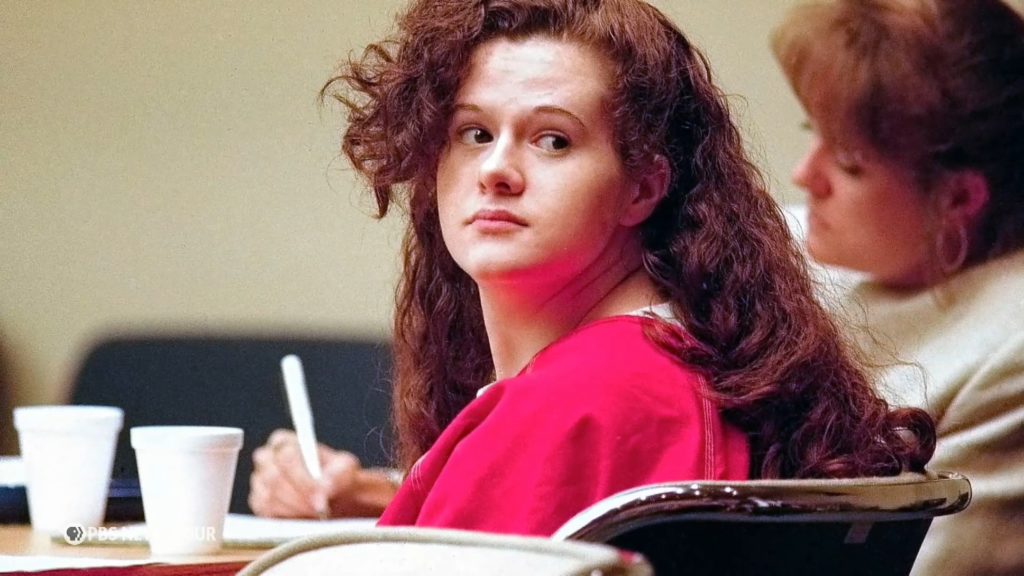
Christa Pike, the Tennessee woman who survived a botched execution, has reportedly taken a few steps in her hospital room six days after she received two lethal injections. Justice correspondent Ali Rogin discussed questions surrounding the state of capital punishment with Austin Sarat, author of "Lethal Injection and the False Promise of Humane Execution."
Notice: Transcripts are machine and human generated and lightly edited for accuracy. They may contain errors.
Christa Pike, the Tennessee woman who survived a botched execution, has reportedly taken a few steps in her hospital room six days after she received two lethal injections. Pike was convicted of the 1995 murder of Colleen Slemmer, and it's now unclear how that case will proceed.
In response to the failed execution attempt, the governor has paused all pending executions through the end of the year, and a judge has ordered Tennessee to preserve evidence of what went wrong.
Austin Sarat, Author, "Lethal Injection and the False Promise of Humane Execution": What happened to Christa Pike was shocking but not surprising.
So it's really an unprecedented event in the recent history of capital punishment.
It certainly also seems unprecedented in terms of what policymakers do now. What options are the leaders in Tennessee who would make these decisions thinking through right now in terms of, do they try again? How does Christa Pike's legal status change?
Well, the first thing that they are doing, as Governor Lee has announced, is, they're going to do an investigation to try to find out what actually went wrong in the execution chamber.
A second execution is very rare in the United States. It happened in 1947 in the state of Louisiana. It's happened a couple of times in Alabama more recently. And the arguments will be made, and I think they're persuasive arguments, that to subject Christa Pike to a second execution attempt would be a cruel punishment, in violation of the Eighth Amendment, and would be a form of double jeopardy prohibited by the Constitution of the United States.
In your research, you have found that lethal injection fails more often than any other method in American history, including hanging and the electric chair. Why is that?
Well, no method of execution is foolproof. Every method of execution that we have used in the United States, whether it's hanging, the electric chair, the gas chamber, now lethal injection, has run into problems.
So it's not surprising that a complicated procedure like lethal injection would run into problems of the kind that it has. And, of course, the problems of lethal injection have not been helped by the desire of states, including the state of Tennessee, to keep what happens in the execution chamber as secret as possible, so that the problems of lethal injection, when they occur, often don't make the headlines that Christa Pike's execution attempt made.
Dive deeper
- Christa Pike, the Tennessee woman who survived a botched execution, has reportedly taken a few steps in her hospital room six days after she received two lethal injections. Justice correspondent Ali Rogin discussed questions surrounding the
- Notice: Transcripts are machine and human generated and lightly edited for accuracy. They may contain errors.
- Christa Pike, the Tennessee woman who survived a botched execution, has reportedly taken a few steps in her hospital room six days after she received two lethal injections. Pike was convicted of the 1995 murder of Colleen Slemmer, and it's
- In response to the failed execution attempt, the governor has paused all pending executions through the end of the year, and a judge has ordered Tennessee to preserve evidence of what went wrong.
- Austin Sarat, Author, "Lethal Injection and the False Promise of Humane Execution": What happened to Christa Pike was shocking but not surprising.